

TRUSTED SOURCE | HEALTH TIPS | PRODUCT REVIEWS | LATEST EDITION
Relaxing Bedtime Routine for Sleep: 5 Simple Habits That Work Naturally

Imagine this: You’ve had a long, exhausting day. Your body feels tired, but the moment your head touches the pillow, your mind starts racing. You check the clock repeatedly, hoping sleep will come, yet relaxing enough to drift off feels difficult.
If this situation sounds familiar, you are not alone. Many adults experience occasional trouble falling asleep, especially during periods of stress, busy schedules, or lifestyle changes.
A consistent relaxing bedtime routine for sleep can help create a healthier transition between daytime activities and nighttime rest. While sleep problems can sometimes require professional support, simple habits such as reducing evening stimulation, practicing relaxation techniques, and creating a comfortable sleep environment may help your body prepare for rest naturally.
In this guide, we’ll explore five simple bedtime habits that can support better sleep quality and help you build a calming nighttime routine that fits your lifestyle.
Affiliate Disclaimer: This article may contain affiliate links, which means we may earn a small commission at no additional cost to you if you purchase through these links. We only share products or services that may be relevant to the topic discussed and overall wellness goals.
Why Your Body Benefits From a Structured Night Routine

Your body follows an internal biological clock called the circadian rhythm, which helps regulate your sleep-wake cycle. This natural rhythm responds to daily signals such as light exposure, temperature changes, meal timing, and your regular habits.
When evenings include excessive screen time, irregular schedules, heavy meals close to bedtime, or ongoing stress, these signals may interfere with your body’s natural preparation for sleep.
A consistent evening routine creates a smoother transition between daytime activity and nighttime rest. Relaxing habits before bed, such as dimming lights, practicing mindfulness, reading, or following a regular sleep schedule, can help signal to your brain that it is time to slow down.
Over time, a calming bedtime routine may support healthier sleep patterns by working with your body’s natural circadian rhythm and encouraging the normal release of sleep-related hormones like melatonin.
Support Your Journey Toward Better Sleep
A balanced approach combining healthy habits and quality ingredients can help you create a more comfortable sleep environment.
5 Simple Habits for an Effective Relaxing Bedtime Routine for Sleep
Building a relaxing bedtime routine for sleep does not require complicated changes. Small, consistent habits can help your mind and body transition from daytime activity to a calmer nighttime state.

1. Disconnect From Digital Screens Earlier
One common modern habit that may affect sleep quality is using smartphones, tablets, or laptops right before bedtime. The light from electronic devices, along with stimulating content, may interfere with your body’s natural preparation for sleep.
Action Step:
Create a digital wind-down period by putting away smartphones and other screens about 30–60 minutes before bedtime. This gives your mind a chance to relax and reduces evening stimulation.
The Benefit:
Reducing screen exposure before bed may support your natural sleep-wake cycle and help your relaxing bedtime routine for sleep feel more calming.
2. Practice Gentle Mind Relaxation Techniques
Stressful thoughts, unfinished tasks, and daily worries can make it difficult to relax when you get into bed. Creating a simple mental relaxation practice may help calm your thoughts before sleep.
How to Calm an Overactive Mind Before Bed
You do not need long meditation sessions to create a peaceful transition into bedtime. Simple techniques can be effective:
- Brain Dumping: Spend a few minutes writing down worries, reminders, or tasks for the next day. This simple habit may help organize your thoughts and create a sense of mental clarity.
- Deep Breathing:Slow, controlled breathing exercises can encourage relaxation and help shift your focus away from stressful thoughts.
Learning how to calm an overactive mind before bed is an important part of creating healthier nighttime habits.
3. Create Natural Ways to Wind Down at Night
Your sleep environment plays an important role in your overall bedtime experience. Transforming your bedroom into a calm and comfortable space can help your brain recognize that it is time to rest.
Creating a Comfortable Sleep Environment
By following consistent natural ways to wind down at night, you can create a more relaxing atmosphere before bedtime.
- Dim the Lights: Reduce bright overhead lighting in the evening and use softer lighting to create a calmer environment.
- Optimize Room Temperature: A slightly cool, comfortable, and well-ventilated bedroom may support better sleep conditions.
- Consider Relaxing Scents: Some people enjoy calming aromas such as lavender or chamomile. Aromatherapy may help create a relaxing atmosphere as part of a nighttime routine.
A peaceful environment can become an important part of your relaxing bedtime routine for sleep.
4. Choose Relaxing Bedtime Drinks and Light Evening Meals
Your evening food and beverage choices can influence how comfortable you feel before bedtime. Large meals, heavy foods, or late caffeine intake may make it harder for some people to relax at night.
Smarter Evening Dietary Choices
Consider limiting caffeine later in the day and choosing lighter evening meals when possible. Warm caffeine-free herbal teas and nutrient-rich foods may fit well into a calming nighttime routine.
Foods containing nutrients such as magnesium are often included in healthy eating patterns that support overall wellness.
Making thoughtful evening choices can complement your relaxing bedtime routine for sleep.
5. Keep a Consistent Sleep Schedule
If you are looking for ways to fix your sleep schedule naturally, maintaining consistency is one of the most important habits to develop.
Going to bed and waking up at different times every day may make it harder for your body to maintain a predictable sleep rhythm.
Action Step: Choose a realistic bedtime and wake-up time that fits your lifestyle, and try to follow the same schedule throughout the week.
The Benefit: Over time, consistent sleep timing may help your body adjust to a more predictable sleep pattern and make your bedtime routine easier to maintain.
Following healthy sleep habits and maintaining a consistent sleep schedule can support better sleep quality and overall wellness.
Learn more about evidence-based sleep recommendations from trusted health experts.
Building a Better Long-Term Sleep Routine
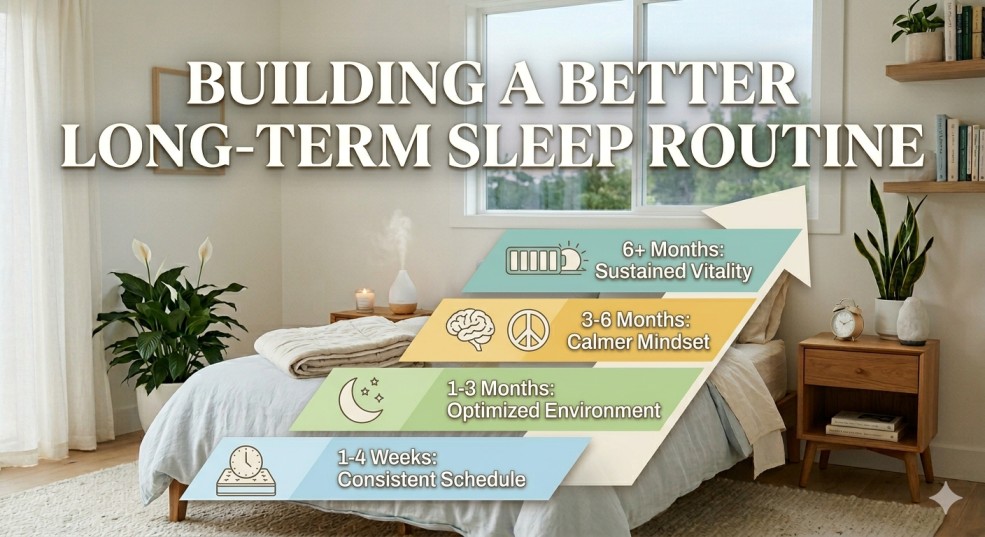
Creating healthier sleep habits is a gradual process that requires consistency and patience. A structured evening routine can help your mind and body recognize when it is time to slow down and prepare for rest.
The most effective nighttime routine for better sleep is one that fits your lifestyle and includes simple habits you can maintain over time. This may include keeping a regular sleep schedule, creating a comfortable sleep environment, managing evening stress, and making mindful lifestyle choices.
Along with healthy daily habits, balanced nutrition and overall wellness practices can support your body’s natural sleep processes. The goal is not a quick fix, but building a sustainable routine that encourages better sleep quality over the long term.
Understanding how your body’s internal clock, known as the circadian rhythm, influences your sleep-wake cycle can help you create better bedtime habits.
Explore how natural sleep patterns are regulated by your body’s biological processes.
Conclusion
Creating a peaceful night routine does not have to be complicated. Simple habits such as reducing screen time, calming your thoughts, creating a comfortable sleep environment, and maintaining a consistent schedule can help support healthier sleep patterns over time.
A relaxing bedtime routine for sleep is not about achieving perfection overnight. It is about building small, sustainable habits that help your mind and body transition into a calmer state each evening.
Start with one or two changes that fit your lifestyle, stay consistent, and gradually create a nighttime routine that supports better sleep quality and overall well-being.
Discover the foundation of perfect night rest. Read our complete guide on 👉🏼 How to Sleep Better Naturally: 5 Simple Habits That Work and transform your health today.
If you often wake up feeling tired even after a full night’s rest, the issue might be a baseline nutrient depletion. Instead of reaching for more caffeine the next morning, consider adding a targeted
👉🏼 magnesium rich support for deep sleep to fix your recovery cycles from the ground up.
💤 Support Your Relaxing Bedtime Routine for Sleep
Building healthy bedtime habits is the foundation of better sleep. For those looking for additional support, a carefully formulated, plant-based sleep supplement may complement a consistent nighttime routine.
Frequently Asked Questions (FAQs)
Medical Disclaimer
Disclaimer: The information provided on fit2fortune.com, including text, graphics, images, and other material, is for informational and educational purposes only. While authored from a professional pharmaceutical perspective, this content is not intended to be a substitute for professional medical advice, diagnosis, or treatment. Always seek the advice of your physician or other qualified healthcare provider with any questions you may have regarding a medical condition or sleep disorder. Never disregard professional medical advice or delay in seeking it because of something you have read on this website. Supplements like YuSleep should be evaluated based on your individual health profile before use.
This is very informative.Really like to read it.
Thank you so much for reading.I’m really glad you found this information helpful. Stay tuned for more health tips!