
⭐ The Ultimate Guide to Digital Detox Benefits: How to Reduce Screen Addiction Naturally

📌 Key Takeaways: Mastering Your Digital Wellness
- Recognize the Signs: Awareness is the first step toward recovery; look out for irritability and “doomscrolling” habits.
- Natural Reduction: Use practical, nature-inspired steps to reduce screen time without feeling overwhelmed.
- Safety First: Understand that a digital detox is a safe process of finding balance, not a complete rejection of technology.
- Practical Action: Start with small wins—create screen-free zones and set a digital curfew for better sleep.
- Sustainable Change: Focus on long-term habits rather than a quick fix to ensure a lasting healthy relationship with your devices.
In the fast-paced digital era of the 21st century, we find ourselves constantly surrounded by technology. From the moment we wake up until we close our eyes at night, the smartphone has become our constant shadow. But have you ever stopped to consider how this “always-connected” lifestyle is impacting your mind and body?
Smartphones, laptops, TVs, and social media have become so deeply woven into our lives that imagining a day without them feels impossible.But pause for a moment and ask yourself:Are these screens truly improving our lives — or quietly stealing our peace, focus, and time?
To truly understand why we need a break, we must look at the various digital detox benefits that impact our daily productivity
In this comprehensive guide, we will dive deep into the world of digital detoxification. We will explore how stepping away from your devices can significantly boost your overall well-being much.
Table of Contents
⭐ What Is a Digital Detox?
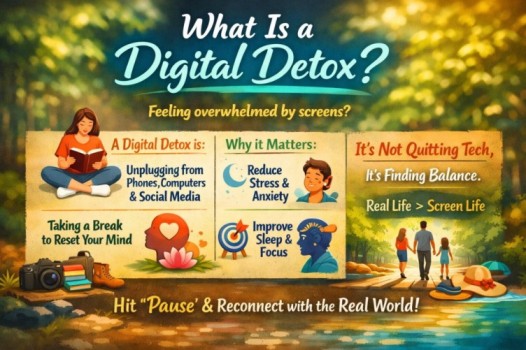
At its core, a digital detox refers to a conscious and intentional period of time during which a person refrains from using electronic devices such as smartphones, computers, tablets, and social media platforms. It is not about hating technology or escaping the modern world — it is about reclaiming your time, attention, and mental space from the digital noise that dominates our daily lives in 2026.
In today’s digital-first lifestyle, we are constantly surrounded by notifications, emails, messages, reels, and endless content. Over time, this nonstop screen exposure overwhelms the brain, reduces focus, disrupts sleep, and increases stress. This is where digital detox becomes essential — not as a trend, but as a necessity for mental well-being.
Think of digital detox as a reset button for your brain. Just as you might follow a detox diet to cleanse your body and improve metabolism, a digital detox cleanses your mind from information overload. It creates space for clarity, calmness, and conscious living — something we rarely experience when screens control our attention.
One of the most powerful digital detox benefits is improved mental clarity. When you reduce screen time, your thoughts slow down, your sleep quality improves, and your ability to focus naturally increases. Digital detox also helps reduce anxiety, improve productivity, and strengthen real-life relationships — benefits that are difficult to achieve when digital distractions dominate every moment.
Most importantly, digital detox is not about quitting technology forever. It is about learning how to use technology mindfully — checking your phone with intention instead of habit. Whether you choose a few screen-free hours each day or a full weekend detox, even small steps can help you reduce screen addiction naturally and experience long-term digital detox benefits in your daily life.
⭐ Recognizing the Warning Signs of Digital Addiction
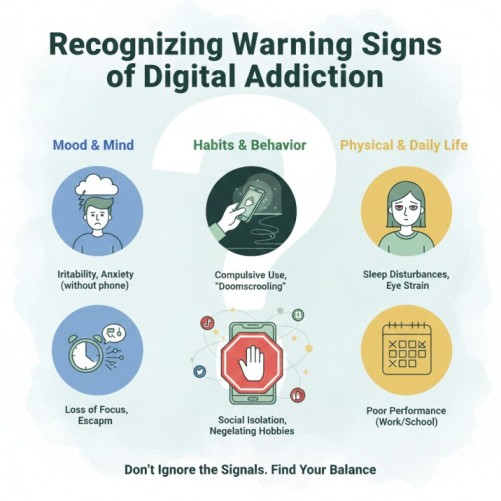
Digital addiction often creeps into our lives unnoticed. It usually starts as a habit but eventually turns into a compulsion that overrides our daily responsibilities. The most significant indicator of problematic device usage is when your screen time begins to negatively interfere with your quality of life, productivity, and health.
Behavioral and Psychological Indicators
When technology usage becomes habitual or compulsive, it starts affecting your behavior in the following ways:
- Academic and Professional Interference: If you find that scrolling through feeds is causing you to miss deadlines or struggle with learning new concepts, it’s a clear sign of addiction.
- Social Disconnection: A major impact of technology on social life is when you are physically present with family and friends but mentally occupied with your phone. This leads to weakened relationships and a sense of isolation.
- Loss of Interest in Hobbies: One of the saddest signs is when “digital noise” takes away time from things you once loved, such as sports, painting, or reading physical books.
- Emotional Stress: Excessive use often leads to unexplained irritability, especially when you are unable to access your device.
Physical Symptoms of Screen Addiction
Your body often sends signals before your mind realizes there is a problem. Prolonged exposure to screens can lead to several physical ailments:
- Digital Eye Strain: Constant flickering and blue light can cause blurred vision, dryness, and stinging in the eyes.
- The “Text Neck” Phenomenon: Maintaining an unhealthy posture while looking down at a phone puts immense pressure on your spine and neck muscles.
- Chronic Headaches: The intensity of light and the mental strain of processing rapid information often trigger frequent tension headaches.
- Sleep Disturbances and Insomnia: Screen use inhibits melatonin production, leading to disrupted sleep patterns. This lack of rest directly impacts your Metabolism and overall immunity.
The Benefits of a Digital Detox May Include:
- Improved Sleep
- Feeling More Present in the Moment
- Better Connection with Friends and Loved one
The Philosophy Behind the Detox
We often ignore how digital detox benefits our physical health by reducing constant eye strain.
The goal of a digital detox is to eliminate the distractions that come from constant connectivity. By stepping away from the screen, you allow yourself to:
- Reconnect with Reality: Engaging in face-to-face conversations without the interruption of a buzzing phone.
- Reduce Stress: Breaking the cycle of “Comparison Culture” on social media which often leads to anxiety.
- Enhance Focus: Giving your brain the opportunity to achieve deep “Mental Clarity”—a topic we have explored in our previous health guides.
⭐ Why “Digital Detox Benefits” are Essential Now
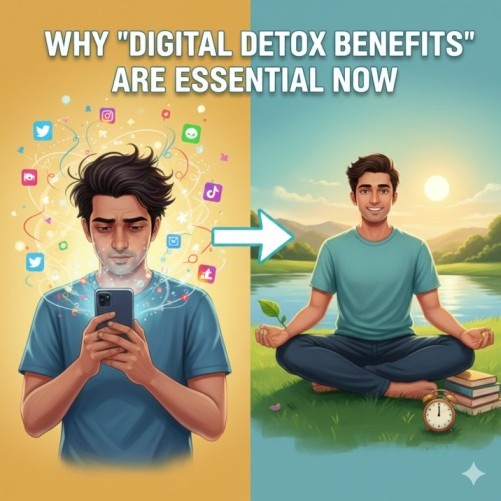
In the past few years, our dependency on technology has reached an all-time high. From remote work to digital education, our screens are always on. However, scientific research (such as studies found on Mayo Clinic or Healthline) suggests that our brains are not wired to process the sheer volume of data we consume daily. This leads to Digital Burnout.
By understanding the Digital Detox Benefits, you are not just taking a break; you are actively investing in your long-term psychological health. Whether it’s a 24-hour “Digital Sabbath” or a week-long retreat, the impact on your well-being is profound.
⭐ Core Digital Detox Benefits for Holistic Well-being

The advantages of disconnecting from the virtual world extend far beyond just saving time. When you reduce your screen dependency, you initiate a healing process for both your mind and body.
1. Sharper Focus and Enhanced Mental Clarity Constant notifications fragment our attention. One of the primary Digital Detox Benefits is the restoration of your “deep work” capability. Without the persistent ping of social media, your brain can focus on complex tasks, leading to better productivity and reduced mental fatigue.
2. Improved Sleep Quality The blue light emitted by screens interferes with the production of Melatonin, the hormone responsible for sleep. By practicing a digital detox, especially before bedtime, you naturally regulate your circadian rhythm, leading to deeper and more restorative sleep.
3. Lower Stress and Anxiety Levels The “Comparison Trap” on social media often leads to feelings of inadequacy. When we talk about mental health, the digital detox benefits include a massive reduction in anxiety and the constant fear of missing out (FOMO).”
4. Better Physical Posture Continuous smartphone use leads to “Text Neck” and strained eyesight. Reducing screen time encourages you to move more, improving your overall posture and physical health—factors that are crucial for a healthy Metabolism.
5. One of the most overlooked digital detox benefits is the significant improvement in posture and eye health.
6. One of the hidden digital detox benefits is the sudden increase in your daily free time for productive hobbies
⭐ How to Reduce Screen Addiction Naturally: A Step-by-Step Guide
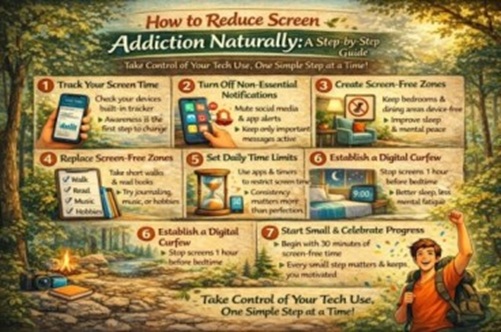
Breaking a digital habit is not about willpower alone; it is about redesigning your environment and daily routines. If you want to experience the full range of Digital Detox Benefits, you must take a systematic approach to reducing your screen time.
Following a structured plan will help you maximize the digital detox benefits and ensure a long-term lifestyle change
1. The “Gradual Fade” Method
Instead of quitting all devices at once, which often leads to a “relapse,” try the gradual fade.
- Start Small: Dedicate the first 30 minutes of your morning and the last 60 minutes of your night to being screen-free.
- Mealtime Rules: Make it a strict rule to never use your phone while eating. This not only reduces screen addiction but also improves your Metabolism by allowing you to eat mindfully.
2. Optimize Your Smartphone Environment
Your phone is designed to be addictive. You can reverse this by:
- Greyscale Mode: Switch your phone’s display to black and white. Most apps (like Instagram and YouTube) use vibrant colors to trigger dopamine. In greyscale, they become significantly less appealing.
- Notification Audit: Turn off all non-human notifications. If it’s not a direct message or a call from a real person, you don’t need an immediate alert.
- The “Out of Sight, Out of Mind” Rule: When you are working or spending time with family, keep your phone in another room. Research shows that even the presence of a smartphone on a table reduces cognitive capacity.
3. Establish “Digital-Free Zones” and Times
Create physical and temporal boundaries to protect your mental space.
- The Bedroom Sanctuary: Keep chargers outside the bedroom. Use a traditional alarm clock instead of your phone to avoid the “first thing in the morning” scroll.
- Digital Sabbath: Pick one day a week (usually Sunday) to go completely offline. Use this time for physical activities, which can support your health goals like Hearing Support and overall body vitality.
4. Find “Analogue” Replacements
Screen addiction often fills a void of boredom. To reduce it naturally, you must find offline activities that provide a similar sense of reward:
- Reading physical books: This improves focus and provides deep Mental Clarity.
- Outdoor Hobbies: Gardening, walking, or sports help in lowering cortisol levels naturally.
- Journaling: Writing your thoughts on paper instead of a notes app helps process emotions better.
5. Use Technology to Combat Technology
It sounds ironic, but certain tools can help you stay away from your screen:
- App Timers: Set strict limits on social media apps. Once the limit is reached, the app locks for the day.
- Focus Modes: Use the ‘Do Not Disturb’ or ‘Work Mode’ features to block distracting apps during productive hours.
6. Use the 20–20–20 Rule for Eye and Brain Health
Every 20 minutes, look at something 20 feet away for 20 seconds. This protects your eyes, reduces mental fatigue, and reminds you to take breaks from screens regularly
⭐ Practical Strategies to Kickstart Your Digital Detox Journey
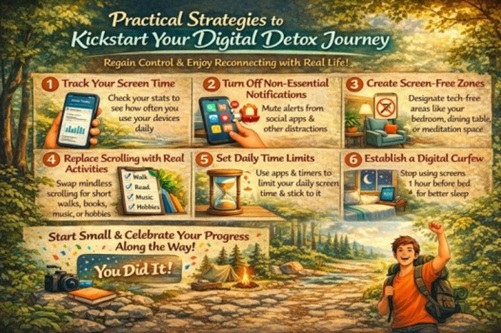
Starting a detox might seem daunting, but breaking it down into actionable steps makes it much more achievable. Instead of a sudden “cold turkey” approach, use these effective ways to set digital boundaries and reclaim your time naturally.
1. Define Your Purpose and Clear Objectives
Before you disconnect, you must understand your motivation. Are you looking for how to start a digital detox for beginners to reduce stress, or do you want to improve your deep focus?To achieve long-term mental clarity, one must consistently remind themselves of the core digital detox benefits
- The Strategy: Set a specific intention. Instead of saying “I will use my phone less,” try “I will replace 1 hour of evening scrolling with 1 hour of reading to improve my Mental Clarity“. Having a concrete goal prevents you from drifting back to your screen.
2. Establish a Realistic Timeframe
If you are struggling with focus, understanding the digital detox benefits for concentration can be a game-changerOne of the best ways to reduce screen time habit is to choose a duration that doesn’t feel like a punishment.
- The Strategy: While some people opt for a 30-day challenge, you can start with a “Digital Weekend.” Deciding exactly how long your detox will last—and sticking to it—builds the mental discipline needed for long-term Digital Detox Benefits.
3. Identify Your Digital Triggers and Exceptions
In 2026, being 100% offline is often impossible due to work or family commitments.
- The Strategy: Categorize your usage. Decide which “toxic” apps (like infinite-scroll social media) are completely off-limits, and which “utility” apps (like Maps or Work Slack) are allowed during specific hours. Setting these realistic digital boundaries ensures you don’t fail just because you had to answer a work call.
4. Utilize Screen Time Management Tools
Ironically, technology can be your best ally in fighting screen addiction.
- The Strategy: Use built-in features like ‘App Limits’ or ‘Focus Mode’ to create a “digital fence.” Setting up automated usage notifications acts as a mindful nudge, reminding you to put the phone down before you fall into a scrolling rabbit hole.
5. Communicate Your Absence to Your Social Circle
Social pressure is a major reason why detoxes fail.
- The Strategy: Proactively inform your friends, family, and colleagues about your detox. By letting them know you’ll be “off the grid” for a while, you eliminate the anxiety of “unanswered messages.” You might even inspire them to join you, turning your solo journey into a supportive community challenge.
6. Curate a List of “Analogue” Alternatives
The “void” left by technology is real. To prevent boredom-induced relapses, you need a solid plan for your offline hours.
- The Strategy: Prepare your environment with non-digital activities. Keep a physical book on your nightstand, plan an outdoor workout to boost your Metabolism, or engage in a hobby that requires your full presence.
⭐ Is a Digital Detox Safe? Addressing Modern Tech Concerns

One of the most common questions people ask is whether it is physically or mentally safe to suddenly disconnect. The short answer is: Absolutely. Humans have thrived for millennia without digital interference. Unless you rely on specific apps for critical medical monitoring or life-saving communication, stepping away from your screens is one of the safest and healthiest decisions you can make in 2026.
Navigating Digital Withdrawal Symptoms and Solutions
When you first attempt to reduce your screen time, you might experience what experts call “digital withdrawal symptoms.” * The Sensation: It is common to feel a sense of phantom vibration (thinking your phone buzzed when it didn’t), mild anxiety, or a restless feeling that “something is missing.”
- The Cause: These feelings are rarely about actual safety. Instead, they stem from the psychological impact of constant connectivity. Most apps are engineered to create a false sense of urgency, making you feel that being “offline” means you are falling behind or missing out on vital information.
Long-term Digital Wellbeing Strategies for Peace of Mind
If the fear of an emergency is holding you back from experiencing Digital Detox Benefits, consider these practical safety measures:
- The “Legacy” Safety Net: Memorize 2-3 essential phone numbers of family members or keep them written in a physical wallet. This ensures you can always reach out from any landline or borrowed phone.
- The “Dumbphone” Transition: If you are worried about being unreachable during your commute, switch your SIM card to a basic feature phone that lacks internet capabilities. This is a highly effective way to manage screen time for professionals who still need to be reachable via voice calls.
- Adopting a “Soft Detox” Approach: If a total blackout is not feasible due to work or health reasons, focus on a targeted detox. Avoiding only high-trigger platforms like social media while keeping utility tools active is a great long-term digital wellbeing strategy that balances safety with mental health.
⭐ Conclusion: Embracing a Balanced Digital Future
As we have explored in this ultimate guide, the journey toward a healthier relationship with technology is not about abandoning our devices, but about reclaiming our lives. The Digital Detox Benefits we discussed—ranging from profound Mental Clarity to improved sleep and physical posture—are essential for anyone living in the hyper-connected world of 2026.
Reducing screen addiction naturally is a marathon, not a sprint. By recognizing the physical symptoms of screen addiction and implementing long-term digital wellbeing strategies, you are doing more than just saving time; you are investing in your long-term health. Just as you prioritize your Metabolism through nutrition or protect your Hearing from loud environments, protecting your mind from digital overload is a vital pillar of modern wellness.
The real world is happening right now, outside the confines of your glowing screen. Whether you start with a small “Digital Sabbath” or a full 30-day challenge, the clarity and peace you will find are worth every missed notification.
Final Thought: Put down your phone, take a deep breath, and reconnect with the people and passions that truly matter. Your journey to a balanced life starts with a single click—the “Power Off” button.In summary, the digital detox benefits are far-reaching, helping us live a more present and mindful life in 2026.
⭐ Frequently Asked Questions (FAQs)
Q1: How long does a digital detox take to show results?
Most people begin to feel a reduction in anxiety and an improvement in focus within just 24 to 48 hours of disconnecting. However, for a complete neurological reset, a 14 to 30-day period is often recommended.
Q2: Will a digital detox hurt my career?
Not if you plan it correctly. By setting realistic digital boundaries and using an “Auto-Reply” for emails, you can maintain professional responsibilities while still enjoying the Digital Detox Benefits during your off-hours.
Q3: Is it safe to stop using social media suddenly?
Yes, it is perfectly safe. While you may experience “FOMO” or temporary digital withdrawal symptoms, there are no physical risks. In fact, your mental health will likely see a significant boost.
Q4: Can digital detox improve my physical health?
Absolutely. By reducing “Text Neck” and eye strain, and by improving your sleep patterns, a detox directly supports your physical vitality and Metabolism.
While breakthroughs in Human Ear Regeneration offer hope for the future, protecting your current hearing health is just as vital. Constant exposure to high-volume digital environments and poor tech habits can lead to irreversible damage before science can even intervene. Just as ear regeneration is a complex biological process, recognizing how our daily habits affect our senses is crucial for overall health. To protect your mental and physical well-being from the ground up, learn more about how it impacts your sensory health.
Medical Disclaimer
Disclaimer: The information provided in this article, including but not limited to text, graphics, and suggestions regarding Digital Detox Benefits, is for informational and educational purposes only. It is not intended to be a substitute for professional medical advice, diagnosis, or treatment. Always seek the advice of your physician or other qualified health provider with any questions you may have regarding a medical condition or mental health concerns. Never disregard professional medical advice or delay in seeking it because of something you have read in this guide.