

TRUSTED SOURCE | HEALTH TIPS | PRODUCT REVIEWS | LATEST EDITION
The Ultimate Guide to Digital Detox Benefits: How to Reduce Screen Addiction Naturally

Key Takeaways: Digital Detox Benefits at a Glance
Understand the Impact: Learn how excessive screen time can affect focus, productivity, sleep habits, and overall well-being.
Discover the Benefits: Explore the most important digital detox benefits, including improved concentration, healthier daily routines, and a better balance between online and offline life.
Start Small: Begin with simple habits such as creating screen-free zones, limiting notifications, and setting a consistent digital curfew.
Use Technology Mindfully: A digital detox isn’t about avoiding technology—it’s about developing healthier digital habits and reducing unnecessary screen time.
Build Lasting Habits: Small, consistent changes can help you create a healthier relationship with technology and make digital wellness part of your everyday routine.
Have you ever checked your phone without even realizing it? From the moment we wake up until bedtime, smartphones, laptops, tablets, and social media keep us constantly connected. While technology makes life more convenient, excessive screen time can also affect our focus, productivity, sleep, and overall well-being.
Many people don’t realize how often they reach for a device throughout the day. Whether it’s checking notifications, scrolling through social media, or replying to emails, our brains rarely get a chance to disconnect.
This is where understanding the digital detox benefits becomes important. Taking regular breaks from digital devices doesn’t mean giving up technology—it means using it more intentionally to create a healthier balance between your online and offline life.
In this comprehensive guide, you’ll discover the most important digital detox benefits, learn practical ways to reduce screen time naturally, and explore simple habits that can help improve focus, sleep quality, productivity, and overall well-being.
What Is a Digital Detox?
A digital detox is the intentional practice of reducing or taking a break from digital devices such as smartphones, computers, tablets, and social media platforms for a specific period of time. The goal is not to avoid technology completely but to develop healthier digital habits and create a better balance between online and offline life.
Understanding the digital detox benefits begins with recognizing how excessive screen time can affect focus, productivity, sleep quality, and overall well-being. Taking regular breaks from screens allows your mind to recharge, helps reduce unnecessary digital distractions, and encourages more mindful technology use.
Whether you choose to disconnect for a few hours each day or dedicate an entire weekend to a digital detox, the objective is the same—to regain control of your attention, spend more time on meaningful activities, and build healthier daily routines.
👉🏼 To explore more research on this topic, refer to the official WHO report on internet use and public health.
👉🏼 If screen time is affecting your nightly rest, learning how to sleep better naturally can help you build healthier bedtime habits.
👉🏼 Combining a digital detox with daily habits for better brain health can support long-term focus, learning, and overall cognitive well-being.
In today’s digital-first world, many of us spend hours each day checking notifications, emails, social media, and other online content. While technology offers many benefits, excessive screen time may contribute to reduced focus, poor sleep habits, and increased daily stress. This is why many people are exploring the digital detox benefits of taking regular breaks from digital devices.
Think of a digital detox as an opportunity to reset your daily habits rather than eliminate technology completely. Just as healthy lifestyle changes can support physical well-being, reducing unnecessary screen time can help create more space for focus, relaxation, meaningful conversations, and mindful living. The goal is to build a healthier relationship with technology—not to avoid it altogether.
One of the most recognized digital detox benefits is the opportunity to improve focus and reduce unnecessary digital distractions. Spending less time on screens may help create better daily routines, support healthier sleep habits, and make it easier to concentrate on work, study, or personal activities. Many people also find that taking regular breaks from digital devices encourages more meaningful face-to-face interactions and a better work-life balance.
Most importantly, a digital detox is not about giving up technology forever. Instead, it encourages more mindful technology use by replacing automatic screen habits with intentional choices. Whether you start with a few screen-free hours each day or dedicate a weekend to unplugging, small and consistent changes can help you reduce screen time naturally and experience the long-term digital detox benefits of a healthier relationship with technology.
Recognizing the Warning Signs of Digital Addiction
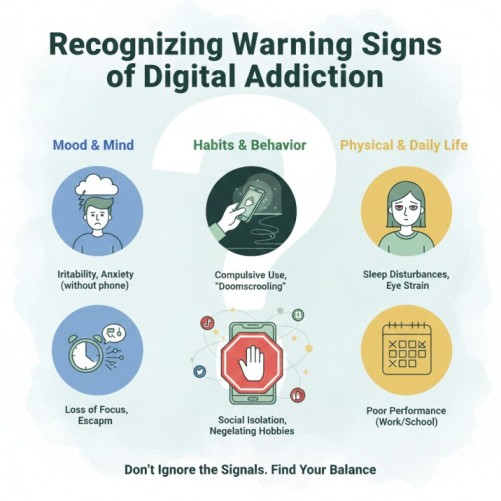
Digital addiction doesn’t usually happen overnight. It often develops gradually as frequent screen use becomes a daily habit that is difficult to control. Over time, excessive use of smartphones, social media, online gaming, or other digital devices may begin to interfere with your productivity, sleep habits, relationships, and overall well-being.
One of the clearest warning signs is when checking your phone or other devices becomes automatic rather than intentional. If you find it difficult to disconnect, feel distracted without your device, or spend more time on screens than you originally planned, it may be a good time to reassess your digital habits and explore the digital detox benefits of taking regular breaks.
Behavioral and Lifestyle Indicators
When screen time becomes difficult to manage, it may begin to influence your daily habits, productivity, and relationships. Here are some common signs that it may be time to consider a digital detox:
Academic and Work Performance
If frequent scrolling, notifications, or social media interruptions make it harder to concentrate, complete tasks, or meet deadlines, your screen habits may be affecting your productivity.
Reduced Quality Time with Others
One common effect of excessive screen time is spending less meaningful time with family and friends. Being physically present but frequently checking your phone can reduce the quality of face-to-face conversations and social interactions.
Less Time for Offline Activities
If digital entertainment has gradually replaced hobbies such as reading, exercising, painting, or spending time outdoors, it may indicate an imbalance between your online and offline activities.
Difficulty Disconnecting
Feeling the urge to check your phone repeatedly or becoming distracted by notifications throughout the day may suggest that your digital habits are becoming more automatic than intentional. Taking regular breaks from screens can help you regain better control over your daily routine.
Physical Signs of Excessive Screen Time
In addition to affecting daily habits, prolonged screen use may also contribute to physical discomfort. While experiences vary from person to person, the following signs are commonly associated with excessive screen time:
Digital Eye Strain
Spending long hours looking at digital screens may cause symptoms such as tired eyes, dryness, blurred vision, or discomfort. Taking regular breaks and adjusting screen brightness can help reduce eye strain.
Neck and Shoulder Discomfort
Looking down at a smartphone or maintaining poor posture while using a computer for extended periods may place extra strain on the neck, shoulders, and upper back. Improving posture and taking movement breaks throughout the day may help reduce discomfort.
Headaches
Extended screen exposure and prolonged visual concentration may contribute to headaches or eye fatigue in some individuals, particularly without regular breaks.
Sleep Disruption
Using digital devices close to bedtime may make it more difficult for some people to wind down and maintain healthy sleep habits. Reducing screen time before bed can support a more consistent bedtime routine and may contribute to better sleep quality.
The Benefits of a Digital Detox
Taking regular breaks from digital devices can support a healthier relationship with technology. While individual experiences vary, many people report the following digital detox benefits after reducing unnecessary screen time:
Healthier Sleep Habits: Limiting screen time before bedtime may support a more consistent sleep routine.
Greater Presence: Spending less time on devices can make it easier to focus on the people and activities around you.
Stronger Personal Connections: Setting aside digital distractions may encourage more meaningful conversations with family and friends.
Improved Focus: Fewer interruptions from notifications and social media can help you concentrate on work, study, or hobbies.
Better Work-Life Balance: Taking intentional breaks from screens can create more time for exercise, outdoor activities, reading, and other offline interests.
The Purpose of a Digital Detox
The goal of a digital detox is not to eliminate technology but to use it more intentionally. By reducing unnecessary screen time, you can create healthier daily habits and make more room for activities that support your overall well-being.
A digital detox may help you:
Reconnect with Everyday Life: Spend more quality time with family, friends, and your surroundings without constant digital interruptions.
Reduce Digital Distractions: Limiting unnecessary notifications and social media use can make it easier to stay focused throughout the day.
Build Healthier Technology Habits: Using devices with greater awareness can help you maintain a better balance between your online and offline life.
Support Better Concentration: Regular screen breaks may improve your ability to focus on important tasks and daily responsibilities.
Why Digital Detox Benefits Matter More Than Ever
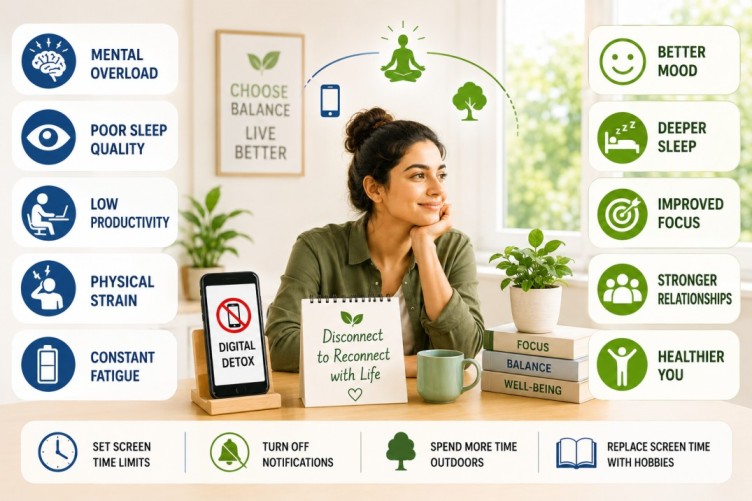
In today’s connected world, digital devices play an important role in how we work, learn, communicate, and stay informed. However, spending long hours on smartphones, computers, and other screens can make it difficult to disconnect and maintain a healthy balance between online and offline life.
This is one of the main reasons why many people are exploring the digital detox benefits of reducing unnecessary screen time. Taking regular breaks from digital devices may help improve focus, encourage healthier daily routines, and create more opportunities for meaningful offline activities.
A digital detox isn’t about avoiding technology altogether. Instead, it’s about using technology more intentionally—limiting unnecessary distractions while making more time for work, family, hobbies, exercise, and quality rest.
By understanding the digital detox benefits, you can make more intentional choices about how and when you use technology. Whether you start with a few screen-free hours each day or try a weekend digital detox, even small steps can help reduce unnecessary screen time and encourage healthier daily habits.
Core Digital Detox Benefits for Overall Well-Being
The benefits of reducing unnecessary screen time go beyond spending less time on your phone. Developing healthier digital habits can support better focus, improved daily routines, and a more balanced relationship with technology. Here are some of the most recognized digital detox benefits:
1. Improved Focus and Mental Clarity
Reducing digital distractions may help you stay focused on important tasks for longer periods. Many people also find it easier to complete work without constant notifications.
2. Healthier Sleep Habits
Limiting screen time before bedtime can support a more consistent nighttime routine and may contribute to better sleep habits.
3. Increased Productivity
Reducing unnecessary screen interruptions can help you stay organized and complete important tasks more efficiently. It also creates more uninterrupted time for work, learning, and personal goals.
4. Better Work-Life Balance
Setting healthy boundaries around screen use can make it easier to separate work from personal time. This allows you to spend more quality time with family, hobbies, and other offline activities.
5. More Meaningful Social Connections
Taking regular breaks from digital devices encourages face-to-face conversations and more focused interactions with the people around you. Even small changes can strengthen your everyday relationships.
6. Healthier Digital Habits
One of the long-term digital detox benefits is developing a more mindful approach to technology. Instead of checking devices out of habit, you learn to use them with greater purpose and intention.
How to Reduce Screen Addiction Naturally: A Step-by-Step Guide
Breaking a digital habit is not about willpower alone; it is about making small, practical changes to your daily routine and surroundings. If you want to experience the full range of digital detox benefits, consistency matters more than perfection.
The following simple strategies can help you spend less time on unnecessary screen activities, become more intentional with technology, and create habits that are easier to maintain in everyday life.
1.Try the “Gradual Fade” Method
Instead of trying to eliminate all screen time at once, reduce it gradually by making small, sustainable changes to your daily routine. This approach is often easier to maintain over the long term.
Start Small
Begin by keeping the first 30 minutes after waking up and the last 60 minutes before bedtime completely screen-free. This simple habit can help you build a healthier daily routine.
Create Screen-Free Mealtimes
Avoid using your phone, tablet, or other digital devices while eating. Screen-free meals encourage more mindful eating and allow you to focus on your food and the people around you.
Follow the 20-20-20 Rule
Every 20 minutes, look at something 20 feet away for 20 seconds. This simple habit may help reduce digital eye strain and reminds you to take regular breaks during extended screen use.
2. Optimize Your Smartphone Environment
Small changes to your smartphone settings can make it easier to reduce unnecessary screen time and develop healthier digital habits.
Use Greyscale Mode
Switch your phone’s display to greyscale (black and white). Without bright, colorful visuals, many apps may feel less engaging, making it easier to limit unnecessary scrolling.
Review Your Notifications
Turn off notifications that are not essential. Keeping alerts limited to important calls, messages, or time-sensitive updates can reduce interruptions throughout the day.
Keep Your Phone Out of Reach
When you’re working, studying, or spending time with family, place your phone in another room or keep it out of sight. Creating physical distance from your device can make it easier to stay focused on the task or people in front of you.
3. Establish Digital-Free Zones and Times
Creating clear boundaries around technology can make it easier to reduce unnecessary screen time and maintain healthier digital habits.
Make Your Bedroom a Screen-Free Space
Keep phone chargers outside the bedroom whenever possible, and use a traditional alarm clock instead of your smartphone. This simple habit can help you avoid checking notifications first thing in the morning or just before going to bed.
Schedule a Regular Digital Break
Choose a few hours each week—or even one day if it fits your lifestyle—to disconnect from unnecessary digital devices. Use this time for activities such as reading, exercising, spending time outdoors, pursuing hobbies, or connecting with family and friends.
4. Replace Screen Time with Offline Activities
Reducing screen time becomes much easier when you replace it with enjoyable offline activities. Finding hobbies that keep you engaged can help you build healthier daily habits and create a better balance between your online and offline life.
Read Physical Books
Reading printed books offers a break from digital screens and provides dedicated time for learning, relaxation, or personal development without constant notifications.
Spend Time Outdoors
Activities such as walking, gardening, cycling, or playing sports encourage regular movement and provide an opportunity to take a break from digital devices.
Try Journaling
Writing your thoughts, ideas, or daily experiences in a notebook can encourage self-reflection and help you become more mindful of your daily habits without relying on a digital device.
5. Use Technology to Build Healthier Digital Habits
Technology itself can also help you manage screen time more effectively. Many smartphones include built-in features that encourage healthier digital habits and reduce unnecessary distractions.
Set App Time Limits
Use app timers to limit the amount of time you spend on social media or other distracting apps each day. These reminders can help you become more aware of your screen habits.
Enable Focus Modes
Turn on features such as Do Not Disturb, Focus Mode, or Work Mode during work, study, or family time. Limiting notifications can make it easier to stay focused on your priorities without constant interruptions.
Conclusion

Building a Healthier Relationship with Technology
A digital detox is not about giving up technology—it’s about using it more intentionally. By making small, consistent changes to your daily habits, you can reduce unnecessary screen time, improve your focus, support healthier sleep habits, and create a better balance between your online and offline life.
Remember, lasting change doesn’t happen overnight. Start with one simple habit, such as keeping your phone out of the bedroom, creating screen-free mealtimes, or setting daily app limits. As these small actions become part of your routine, maintaining healthier digital habits becomes much easier.
The goal isn’t perfection—it’s progress. By taking control of your technology use instead of letting it control your time, you can build a healthier and more mindful lifestyle for the long term.
Frequently Asked Questions(FAQs)
Medical Disclaimer
The information provided in this article, including but not limited to text, graphics, and suggestions regarding Digital Detox Benefits, is for informational and educational purposes only. It is not intended to be a substitute for professional medical advice, diagnosis, or treatment. Always seek the advice of your physician or other qualified health provider with any questions you may have regarding a medical condition or mental health concerns. Never disregard professional medical advice or delay in seeking it because of something you have read in this guide.