

TRUSTED SOURCE | HEALTH TIPS | PRODUCT REVIEWS | LATEST EDITION
Brain Exercises for Adults: Simple Activities to Support Mental Sharpness
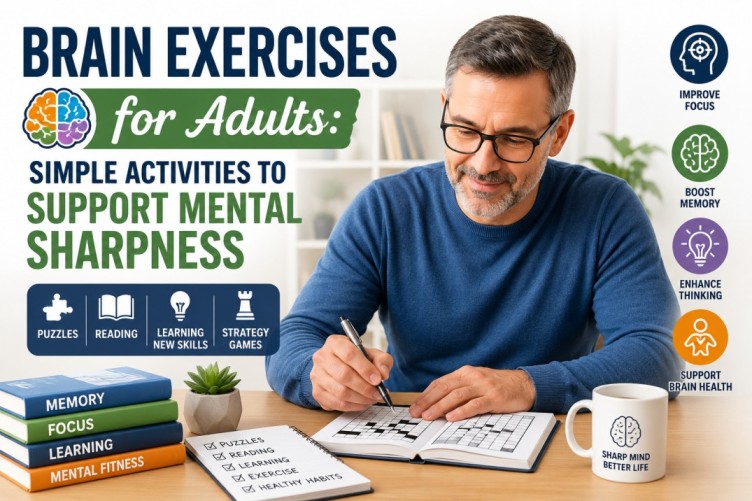
Many adults notice that staying mentally sharp requires more effort than it did in their younger years. Occasional forgetfulness, difficulty concentrating, or feeling mentally tired after a busy day can become more common with age. The good news is that the brain remains adaptable throughout life, and regular mental stimulation may help support cognitive function, focus, and memory.
Brain exercises for adults do not have to be complicated. Simple daily activities that challenge memory, attention, language, and problem-solving skills can provide meaningful mental stimulation while fitting easily into a normal routine. Combined with healthy lifestyle habits, these exercises can become part of a practical long-term brain wellness strategy.
Affiliate Disclaimer: This article may contain affiliate links. If you choose to make a purchase through certain links on this website, we may earn a small commission at no additional cost to you. These commissions help support the maintenance of this website and the creation of educational content.
Why Mental Stimulation Matters
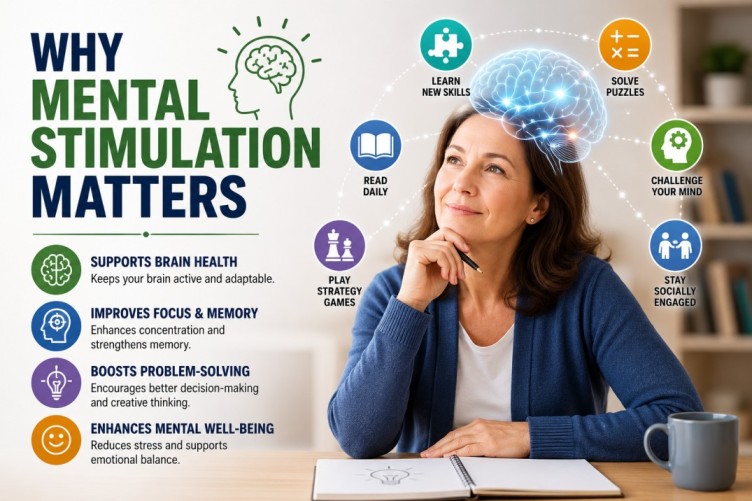
While no exercise can guarantee prevention of cognitive decline, staying intellectually active is associated with better cognitive health and may contribute to maintaining everyday mental abilities as people age.
Best Brain Exercises for Adults
The most effective brain exercises are usually those that are enjoyable enough to do consistently. Variety is also important because different activities challenge different cognitive skills.
Crossword Puzzles and Word Games
Crossword puzzles, word searches, and vocabulary games stimulate language processing, memory retrieval, and pattern recognition. They can also encourage learning new words and recalling information from long-term memory.
Try this: Spend 10–15 minutes each morning solving a crossword puzzle or playing a word-based mobile app.
Are certain foods helping or hurting your cognitive performance? 👉🏼 Explore simple nutrition habits that support a healthy brain.See which everyday foods may contribute to long-term brain wellness.
Sudoku and Number Puzzles
Sudoku requires logical reasoning, working memory, and attention to detail. Because the puzzle must be solved step by step, it encourages strategic thinking and concentration.
Beginner tip: Start with easy puzzles and gradually increase the difficulty level as your confidence improves.
Learning a New Skill
One of the most powerful forms of mental stimulation is learning something unfamiliar. Examples include:
- A new language
- A musical instrument
- Photography
- Painting or drawing
- Cooking new recipes
- Basic coding or computer skills
Learning a new skill engages multiple brain regions simultaneously and can improve attention, memory, and problem-solving abilities.
Repeating the same activity every day may eventually become predictable. Including different types of challenges throughout the week can create a more engaging experience. Combining creative, educational, and skill-based activities provides a broader range of experiences while helping maintain interest over time.
Memory Recall Exercises
Simple recall exercises can help challenge short-term memory and attention.
Examples:
- Read a short article and summarize it from memory.
- Look at a grocery list for one minute, then try to remember the items without looking.
- Recall the events of your day in chronological order before going to bed.
These activities require active retrieval, which is an important component of memory practice.
Strategy Games
Chess, checkers, bridge, and other strategy games encourage planning, decision-making, and flexible thinking. They often require anticipating future moves and adapting to changing situations, which can provide a strong cognitive workout.
Reading and Discussion
Reading books, newspapers, or educational articles exposes the brain to new ideas and information. Discussing what you read with another person adds an additional layer of cognitive engagement because it requires comprehension, recall, and verbal expression.
Quick Daily Brain Workout (10 Minutes)
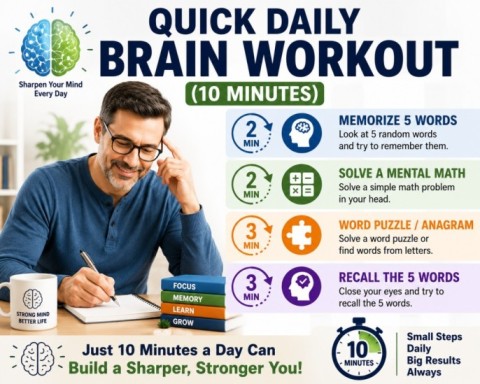
If you have limited time, this simple routine can provide a brief but varied mental challenge:
| Time | Activity | Cognitive Skill |
|---|---|---|
| 2 min | Memorize 5 random words | Memory |
| 2 min | Solve a simple math problem mentally | Attention & processing |
| 3 min | Complete a word puzzle or anagram | Language |
| 3 min | Recall the 5 words from memory | Memory retrieval |
This routine is short enough to fit into a lunch break or morning routine while still engaging several cognitive functions.
Physical Exercise Also Supports Brain Health
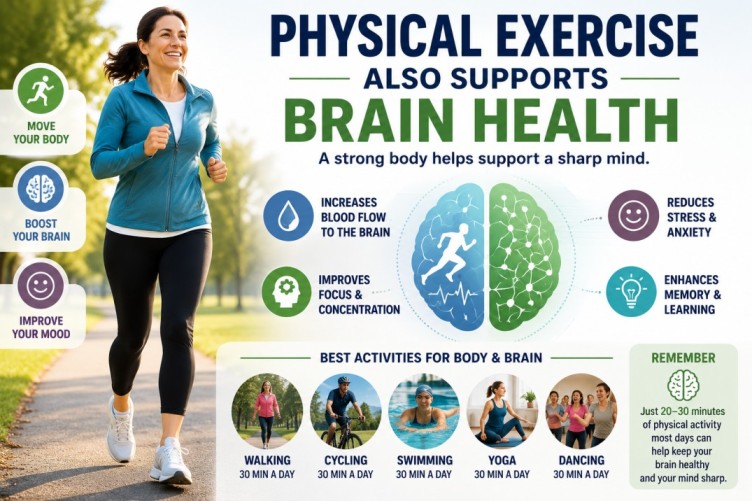
Mental exercises work best when paired with regular physical activity. Aerobic exercise such as brisk walking, cycling, swimming, or dancing increases blood flow to the brain and is associated with better cognitive performance and mood. Even moderate activity for 20–30 minutes most days of the week can provide meaningful health benefits.
A practical combination is to pair physical movement with mental stimulation, such as listening to an educational podcast during a walk or practicing memory recall while exercising.
The Role of Sleep in Mental Sharpness
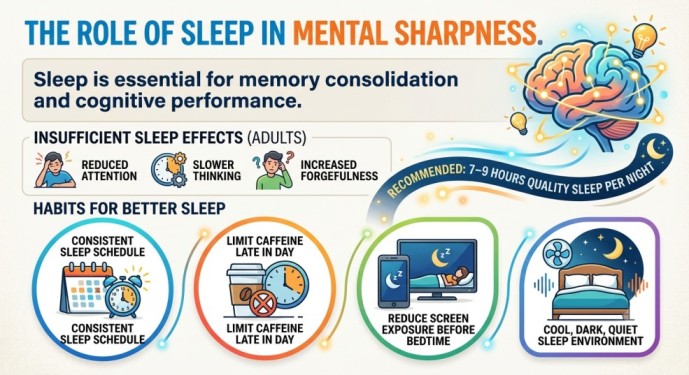
Sleep is essential for memory consolidation and cognitive performance. Adults who consistently get insufficient sleep often experience reduced attention, slower thinking, and increased forgetfulness. For most adults, 7–9 hours of quality sleep per night is recommended.
Simple habits that may support better sleep include:
- Keeping a consistent sleep schedule
- Limiting caffeine late in the day
- Reducing screen exposure before bedtime
- Creating a cool, dark, and quiet sleep environment
Without adequate sleep, even the best brain exercises are less likely to be effective.
Nutrition and Cognitive Function
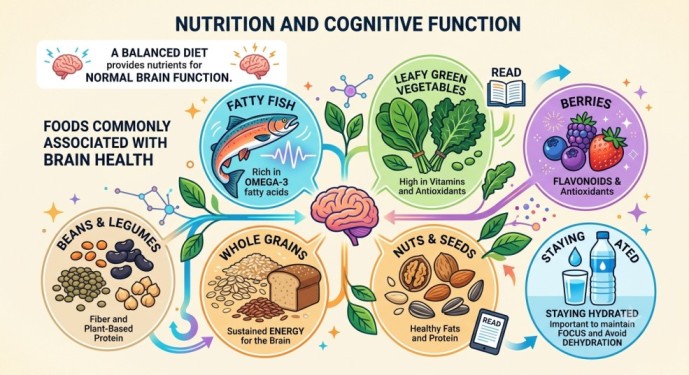
A balanced diet provides the nutrients the brain needs for normal function. Foods commonly associated with brain health include:
- Fatty fish rich in omega-3 fatty acids
- Leafy green vegetables
- Berries
- Nuts and seeds
- Whole grains
- Beans and legumes
Staying hydrated is also important, as mild dehydration can affect concentration and mental performance.
Brain exercises help keep your mind active, but they work even better when combined with healthy daily routines.
👉🏼 Explore how daily habits for brain health can strengthen your overall lifestyle through better sleep, regular movement, stress management, and other practical habits that support long-term brain wellness. Building these routines consistently can make a meaningful difference over time.
Sample Weekly Brain Exercise Plan
| Day | Activity | Duration |
| Monday | Crossword puzzle | 15 min |
| Tuesday | Learn new vocabulary or language phrases | 20 min |
| Wednesday | Sudoku or logic puzzle | 15 min |
| Thursday | Read an article and summarize it | 20 min |
| Friday | Play a strategy game | 20 min |
| Saturday | Practice a new skill or hobby | 30 min |
| Sunday | Memory recall exercise + reflection | 15 min |
Rotating activities helps prevent boredom and provides a broader range of cognitive challenges.
Could daily screen habits be affecting your mental sharpness?Discover how screen time may influence brain health.Learn which 👉🏼 digital habits can support better focus and mental performance.
Habits That Can Reduce Mental Sharpness
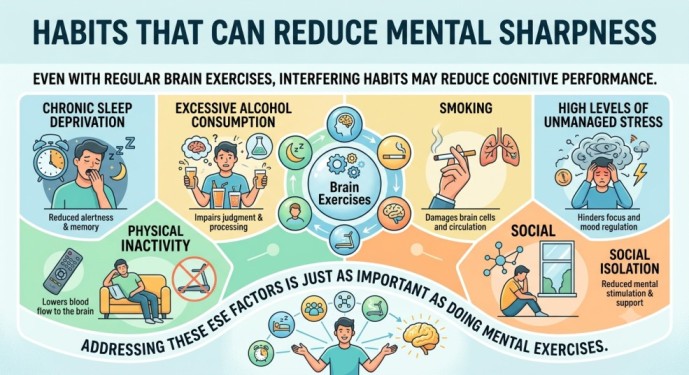
Even with regular brain exercises, certain habits may interfere with cognitive performance:
- Chronic sleep deprivation
- Excessive alcohol consumption
- Smoking
- High levels of unmanaged stress
- Physical inactivity
- Social isolation
Addressing these factors can be just as important as doing mental exercises.
Feeling mentally sluggish even after staying active?
👉🏼 Explore practical ways to reduce mental fog naturally.Learn what may be contributing to ongoing mental tiredness.
Frequently Asked Questions (FAQs)
👉🏼 Learn more about cognitive health from the National Institute on Aging
Conclusion
Brain exercises for adults can be simple, inexpensive, and surprisingly enjoyable. Activities such as crossword puzzles, Sudoku, memory recall exercises, reading, strategy games, and learning new skills all provide valuable mental stimulation that may help support focus, memory, and cognitive flexibility.
For the best long-term results, combine mental exercises with regular physical activity, quality sleep, balanced nutrition, stress management, and social engagement. Rather than looking for a single “magic” exercise, aim for a varied routine that keeps your brain challenged in different ways throughout the week. Consistent daily practice, even for a few minutes at a time, is often the most practical and sustainable approach to maintaining mental sharpness as you age.
Medical Disclaimer
The information provided in this article is for educational and informational purposes only and should not be considered medical advice, diagnosis, or treatment. Brain health, cognitive function, and individual wellness needs can vary from person to person.
Always consult a qualified healthcare professional or licensed medical provider regarding any health concerns, medical conditions, or treatment decisions. Never disregard professional medical advice or delay seeking medical attention because of information you have read on this website.
Any activities, suggestions, or resources discussed in this article are intended to support general wellness and should not replace personalized medical guidance from a healthcare professional.
Image Disclaimer: Images are used for illustrative and educational purposes only. They do not represent guaranteed results, and individual experiences may vary.