

TRUSTED SOURCE | HEALTH TIPS | PRODUCT REVIEWS | LATEST EDITION
Screen Time and Brain Health: How to Build Healthier Daily Digital Habits
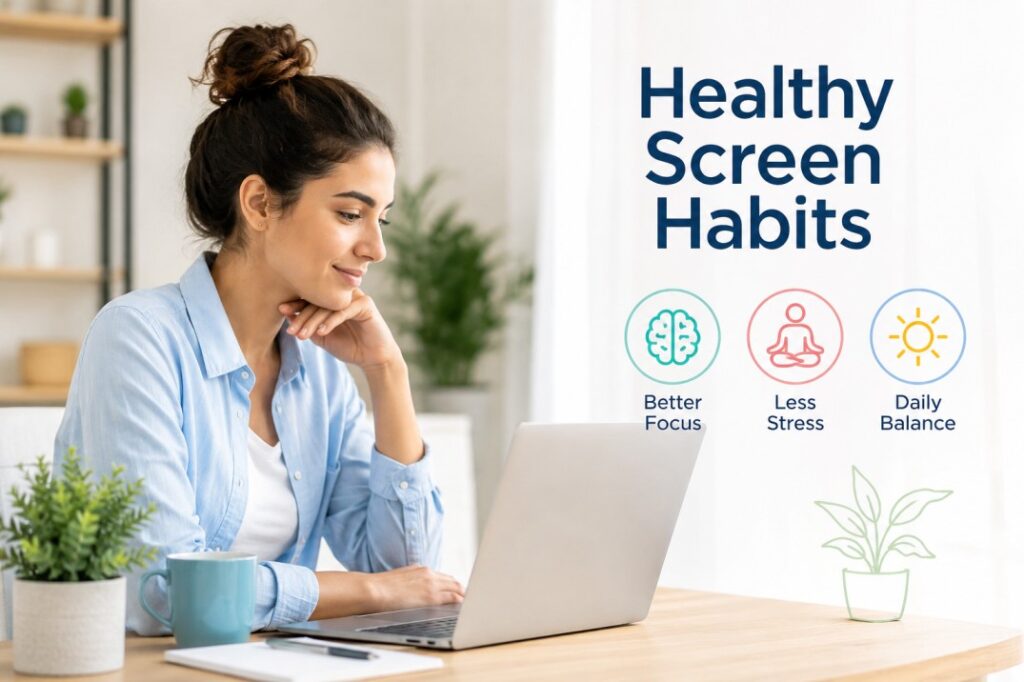
Have you ever reached the end of the day and wondered where all your time went? From checking emails and attending online meetings to scrolling through social media, screens have become part of almost every daily routine. That’s why many people are becoming more curious about the connection between screen time and brain health and looking for simple daily screen habits that fit naturally into a busy lifestyle.
The good news is that building healthy screen habits doesn’t mean giving up your phone, computer, or favorite apps. Instead, it’s about creating a balanced screen routine that works for your schedule while making room for work, family, hobbies, and everyday life. Small adjustments can often make your daily digital routine feel more organized and manageable.
In this guide, you’ll discover practical tips, digital wellness habits, and easy ways to build a healthier relationship with technology. Whether you work on a computer all day, spend time on your smartphone, or simply want to create a more healthy digital lifestyle, these everyday ideas can help you develop a routine that feels balanced and sustainable.
Affiliate Disclaimer: Some of the links on this website may be affiliate links. This means that if you choose to make a purchase through these links, we may earn a small commission at no additional cost to you.We only recommend products, services, or resources that we believe may provide value to our readers. However, any purchasing decision is entirely yours, and we encourage you to do your own research before making a purchase.Your support helps us maintain this website and continue creating free, high-quality educational content.
- Learn more about creating a 👉🏼 healthy digital life.
- Harvard Health shares practical ideas for building a healthy digital life.
Why Screen Time and Brain Health Matter Today
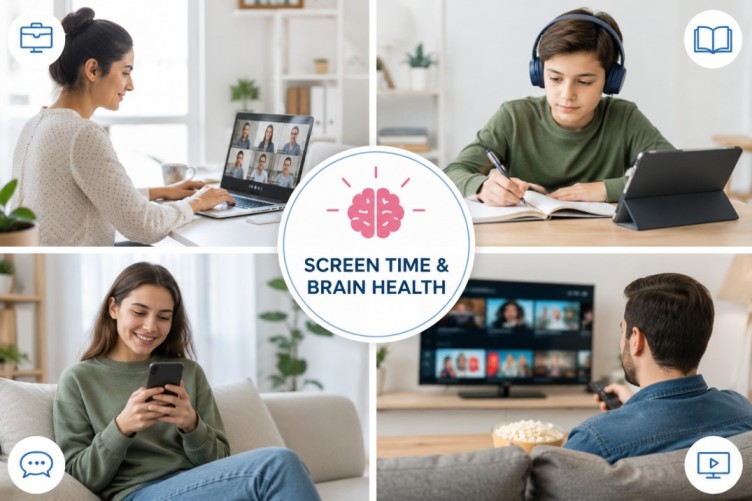
Technology has changed the way people work, communicate, learn, and relax. For many adults, switching between smartphones, laptops, tablets, and televisions is simply part of a normal day. Whether it’s answering messages, joining virtual meetings, reading the news, shopping online, or staying connected with family and friends, digital devices now support many everyday activities.
As technology has become more integrated into daily life, conversations about screen time and brain health have also become more common. Instead of asking whether screens should be avoided, many people are now interested in understanding how digital devices can fit into a balanced lifestyle without taking over every part of the day.
This growing interest has encouraged people to pay closer attention to their everyday screen habits and the way technology fits into work, home life, and personal routines. Creating a healthier relationship with screens doesn’t require major lifestyle changes. In many cases, it begins with becoming more aware of daily choices and making small adjustments that support screen time balance over time.
Learning about healthy technology habits can help you use digital devices with greater purpose while still enjoying the convenience they bring. The goal is to create routines that feel practical, flexible, and easy to maintain as part of everyday life.
- Explore Harvard Health’s advice on staying focused in the era of digital distractions.
- Learn more about managing digital distractions from Harvard Health.
Healthy Screen Habits for Work, Home, and Daily Life
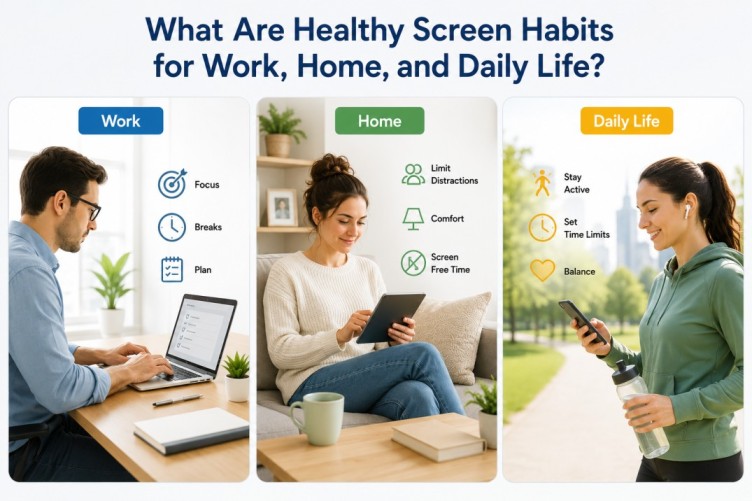
Healthy screen habits don’t look the same for everyone. A student attending online classes, a professional working from home, and a parent managing family responsibilities all rely on digital devices in different ways. Instead of following one universal approach, it’s often more practical to create a daily screen routine that matches your responsibilities, schedule, and personal priorities.
Create Comfortable Spaces for Different Types of Screen Use
Where you use your devices can influence how organized and comfortable your day feels. For example, many people find it helpful to keep work-related activities in one area, while using another space for entertainment or personal browsing. These simple boundaries can make it easier to switch between different parts of the day without feeling like every activity happens in the same place.
Use Technology With Clear Purpose
One of the easiest healthy screen habits is deciding why you’re picking up a device before unlocking it. Whether you’re replying to messages, completing a work project, paying bills, or catching up with family, having a clear purpose can help your digital activities stay intentional instead of becoming random interruptions throughout the day.
Build Routines That Fit Everyday Life
A balanced approach doesn’t require a perfect schedule. Some days involve longer work hours, while others leave more time for hobbies, family, or outdoor activities. The goal is to build screen time balance by adjusting your routines to fit real life instead of trying to follow unrealistic rules. Over time, these flexible routines can become part of a healthy digital lifestyle that feels practical and sustainable.
Rather than measuring success by the number of hours spent on a device, many people find it more helpful to focus on how technology supports their goals. When digital tools are used with intention, they can remain a valuable part of work, learning, communication, and everyday living
👉🏼 Explore practical brain-friendly diet ideas that support everyday cognitive wellness.
How to Create a Digital Environment for Better Focus
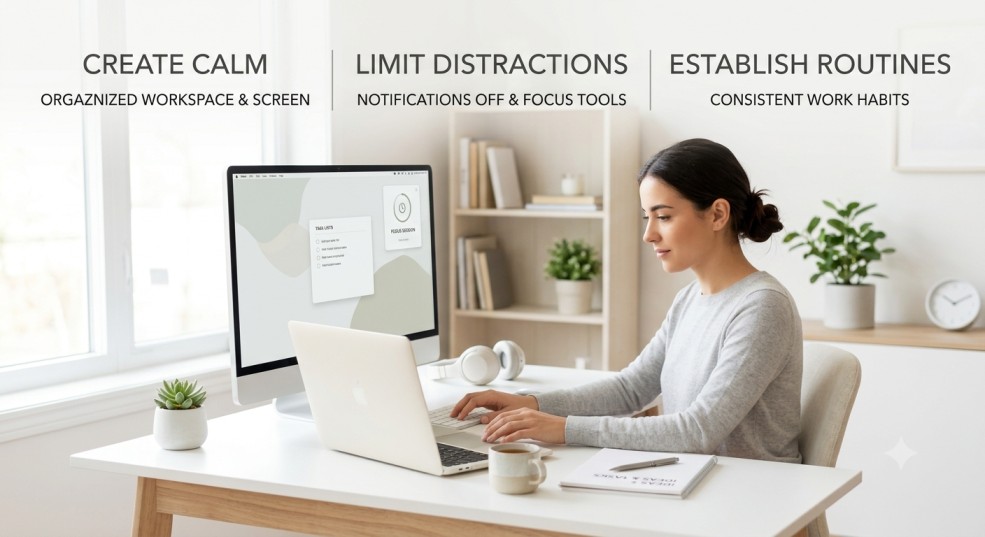
Your digital environment is more than the devices you use—it’s also how information is presented throughout your day. From the layout of your home screen to the number of apps competing for your attention, small digital choices can influence how smoothly everyday tasks feel. Creating a more organized digital space is a practical way to support screen time and brain health while keeping technology useful and easy to manage.
Simplify Your Home Screen
Many smartphones come with dozens of apps spread across multiple screens, making it harder to find the tools you use most often. Keeping frequently used apps on the first screen while moving less important apps into folders creates a cleaner digital experience. This simple adjustment supports healthy technology habits without changing the way you normally use your device.
👉🏼 Discover morning habits that can help you start the day with better mental clarity and focus.
Choose Notifications That Truly Matter
Notifications can be helpful when they provide useful information, but not every app needs to interrupt your day. Reviewing notification settings from time to time allows you to decide which alerts deserve your attention. Keeping only the most important notifications active helps create digital wellness habits that fit naturally into everyday work and personal responsibilities.
Organize Your Apps for Everyday Use
Keeping your apps organized can make everyday digital tasks feel simpler and more efficient. Grouping similar apps into folders—such as communication, productivity, finance, or entertainment—helps you find what you need more quickly without searching through multiple screens. Placing your most frequently used apps in easy-to-reach locations also supports a smoother digital experience.
As your needs change, you can rearrange your apps to match your current priorities. This simple habit helps maintain a balanced digital routine while supporting healthy digital habits for everyday life. An organized home screen isn’t about perfection—it’s about making your device easier to use every day.
Everyday Habits for Better Screen Time and Brain Health
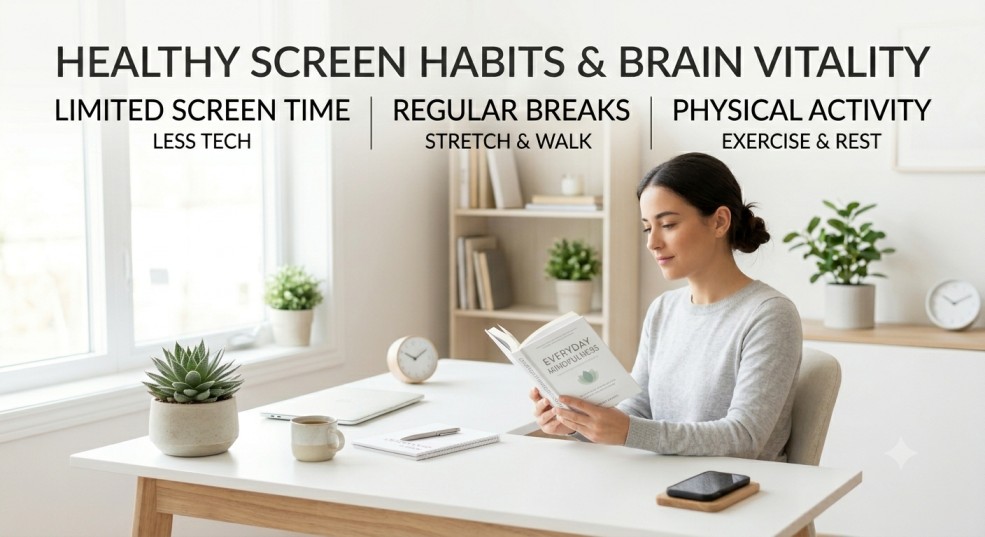
Creating better screen time and brain health habits isn’t about making dramatic lifestyle changes. Instead, it’s about developing small routines that help technology fit naturally alongside the rest of your day. When digital activities are balanced with other everyday experiences, it becomes easier to build a routine that feels practical, flexible, and enjoyable over time.
Give Different Parts of Your Day Their Own Purpose
One practical way to support screen time balance is to let different parts of your day serve different purposes. For example, your morning may focus on work or learning, your afternoon on personal responsibilities, and your evening on family time or personal interests. This approach creates a natural rhythm without making technology the center of every activity and is one of the simple ways to manage screen time in everyday life.
Include Activities That Don’t Depend on Digital Devices
A healthy digital lifestyle doesn’t mean avoiding technology—it simply means making room for other enjoyable activities as well. Reading a printed book, preparing a meal, exercising, working on creative projects, or spending time outdoors can add variety to your schedule. These choices help create healthy digital habits for everyday life while keeping technology as one useful part of a balanced day.
Build Habits That Fit Your Lifestyle
Healthy routines are easier to maintain when they match the way you already live. Instead of trying to follow a perfect schedule, look for small habits that naturally fit into your work, family, and personal commitments. Choosing realistic goals makes it easier to build healthy screen habits that feel consistent rather than overwhelming.
Your daily routine may change because of work deadlines, travel, weekends, or family responsibilities, and that’s completely normal. Adjusting your habits as your lifestyle changes helps you create a balanced digital routine without feeling restricted. The goal isn’t perfection—it’s finding practical approaches that continue to work over time.
Small, sustainable changes often have a greater impact than dramatic lifestyle adjustments. By making technology part of a well-rounded routine, you can continue developing digital wellness habits that support a healthy digital lifestyle in a way that feels natural for your everyday life.
👉🏼 Learn practical lifestyle strategies that can help improve mental clarity throughout the day.
Common Screen Habits That Disrupt Healthy Digital Routines

Developing a balanced relationship with technology isn’t only about adding good habits—it’s also about recognizing everyday patterns that may make your routine feel less organized. Many of these habits develop gradually and often become part of daily life without much thought. Becoming more aware of them can help support screen time and brain health while making it easier to build routines that feel practical and sustainable.
Using Multiple Devices at the Same Time
It’s common to check a smartphone while watching television or browsing a tablet during online meetings. Although technology makes multitasking easy, switching between several devices throughout the day can make your digital activities feel less organized. Choosing one device for one task whenever possible is one of the screen time tips that can help simplify everyday technology use.
Letting Notifications Interrupt Every Activity
Constant interruptions can make it difficult to stay focused on the task you’re already doing. Instead of responding immediately to every alert, consider deciding which notifications truly need your attention and which can wait until a more convenient time. This small adjustment supports healthy technology habits without changing the role technology plays in your day.
Switching Between Tasks Too Frequently
Moving from one task to another every few minutes can make your digital day feel more scattered than it needs to be. For example, replying to emails while working on a report, checking messages during an online course, or frequently switching between browser tabs can interrupt your workflow. Creating better screen time and brain health habits often starts with giving one task your attention before moving on to the next.
Instead of trying to do everything at once, consider grouping similar digital activities together. Completing emails in one session, scheduling time for online research, or finishing one project before opening another are simple ways to manage screen time while making everyday technology use feel more organized. These small adjustments also support healthy technology habits that fit naturally into busy schedules.
Working through tasks one at a time doesn’t mean changing the amount of technology you use. It simply helps create a balanced digital routine where your devices support your priorities instead of constantly competing for your attention.
👉🏼 Read this guide for natural ways to improve focus and support everyday memory performance.
How to Maintain Healthy Screen Habits Over Time

Building screen time and brain health habits is only the first step. The real value comes from creating routines that continue to fit your lifestyle as your work, family responsibilities, and personal goals change over time. Instead of aiming for perfection, focus on habits that feel realistic enough to become part of your everyday life.
Adjust Your Habits as Your Lifestyle Changes
No two weeks look exactly the same. Busy work periods, holidays, travel, or changes in family schedules can all influence how you use technology. Rather than following fixed rules, allow your healthy screen habits to adapt to your current routine. Flexible habits are often easier to maintain because they grow with your lifestyle instead of working against it.
Measure Progress by Consistency, Not Perfection
Healthy digital routines are built through regular practice, not flawless performance. Missing a routine occasionally doesn’t mean you’ve failed. Returning to your usual habits the next day is often more valuable than trying to follow an unrealistic schedule. This practical mindset supports a healthy digital lifestyle while helping you create a balanced digital routine that remains sustainable.
Celebrate Small Progress Along the Way
Building healthy digital habits is a long-term process, and progress doesn’t always happen in a straight line. Instead of expecting immediate results, take time to notice the small improvements you make along the way. Whether you’ve become more organized with your digital routine or feel more comfortable managing everyday technology, these small wins can help you stay motivated.
Recognizing gradual progress encourages healthy screen habits to become part of your regular lifestyle rather than a short-term goal. This positive approach also supports a healthy digital lifestyle by helping you focus on steady improvement instead of unrealistic expectations.
Improving your screen habits is an excellent first step, but lasting brain wellness depends on the routines you follow every day.
👉🏼 Discover how daily habits for brain health can help you build simple routines that support better focus, quality sleep, regular movement, and long-term mental wellness. Small lifestyle changes practiced consistently often make the biggest difference over time.
Pros of Healthy Screen Habits
- Support a more organized daily routine.
- Encourage intentional technology use.
- Help create better screen time balance.
- Make digital activities feel more structured.
- Support a healthy digital lifestyle over time.
Challenges to Keep in Mind
- Building new habits takes time and consistency.
- Daily routines may need occasional adjustments.
- Work or family responsibilities can affect screen habits.
- Not every strategy works for every individual.
- Small changes are often easier to maintain than major lifestyle changes.
👉🏼 Explore simple daily habits that may help support focus, learning, and cognitive performance.
Frequently Asked Questions
Conclusion
Building better screen time and brain health habits doesn’t require giving up technology or following a perfect routine. Instead, it begins with small, practical choices that fit naturally into your everyday life. Organizing your digital environment, using technology with intention, and creating routines that match your personal responsibilities can all contribute to a healthier relationship with digital devices.
The most effective approach is one that you can maintain over time. As your lifestyle changes, your digital habits can change with it. Focusing on consistent progress instead of perfection makes it easier to develop healthy screen habits that remain realistic, flexible, and sustainable.
Technology is an important part of modern life, and when used thoughtfully, it can continue to support work, learning, communication, and personal interests. By taking a balanced approach, you can create a healthy digital lifestyle that works for you today and continues to fit your needs in the future.
Medical Disclaimer
The information provided in this article is for educational and informational purposes only and should not be considered medical advice, diagnosis, or treatment. While this guide discusses screen time and brain health and shares general lifestyle information, it is not intended to replace professional healthcare guidance.
Individual needs and circumstances may vary. If you have concerns about your health, cognitive function, vision, or any medical condition, consult a qualified healthcare professional before making significant changes to your daily routine or lifestyle.
The content on this website is based on publicly available information and general wellness practices. No specific health outcomes or results are guaranteed.
Image Disclaimer: Images are used for illustrative and educational purposes only. They do not represent guaranteed results, and individual experiences may vary.