

TRUSTED SOURCE | HEALTH TIPS | PRODUCT REVIEWS | LATEST EDITION
How to Improve Oral Health Naturally: Simple Daily Habits for Healthier Teeth and Gums
Your oral health affects more than just how your teeth look. Healthy teeth and gums can make it easier to eat, speak, and maintain everyday comfort. The good news is that many oral health habits are simple enough to build into your daily routine.
Learning how to improve oral health starts with consistent basic care rather than complicated routines. Brushing with fluoride toothpaste, cleaning between your teeth, choosing tooth-friendly foods and drinks, avoiding tobacco, and keeping regular dental appointments can all contribute to better oral hygiene.
However, good oral care is not only about preventing cavities. Paying attention to your gums, limiting frequent exposure to added sugars and acids, and recognizing changes such as persistent bleeding, swelling, pain, or sensitivity can also help you know when professional dental care may be appropriate.
In this guide, we’ll look at practical, evidence-based habits that can support healthier teeth and gums and explain how to incorporate them into your everyday routine.
Affiliate Disclosure:
Some links on this website may be affiliate links, which means we may earn a commission if you make a purchase through a qualifying link, at no additional cost to you. Our recommendations and editorial content are intended to provide helpful, transparent information, and affiliate relationships do not change the information we provide or the way we evaluate products.
10 Simple Habits to Improve Oral Health
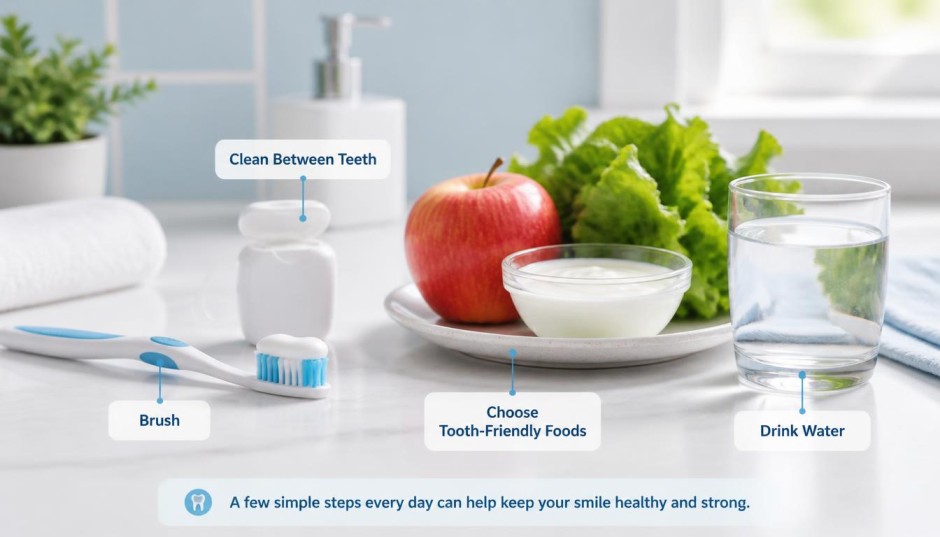
1. Brush Your Teeth Twice a Day With Fluoride Toothpaste
One of the most important habits for maintaining good oral health is brushing your teeth twice a day with fluoride toothpaste. Regular brushing helps remove plaque and food particles that accumulate on the teeth and along the gumline.
The American Dental Association recommends brushing for two minutes, twice daily, using a soft-bristled toothbrush and fluoride toothpaste. Evidence reviewed by the ADA supports twice-daily brushing with fluoride toothpaste as an effective part of preventing tooth decay and supporting gum health.
For better results, use gentle, short strokes and clean the outer, inner, and chewing surfaces of your teeth. Pay particular attention to the gumline, but avoid brushing aggressively, as excessive pressure can irritate the gums.
A simple routine is:
- Brush for about two minutes each time.
- Use fluoride toothpaste.
- Choose a soft-bristled toothbrush.
- Brush gently along the gumline.
- Clean all accessible tooth surfaces.
- Replace your toothbrush when the bristles become worn or frayed.
Brushing is an essential foundation of daily oral care, but it does not clean the spaces between teeth effectively. That makes daily cleaning between your teeth an important next step in a complete oral hygiene routine.
2. Clean Between Your Teeth Daily
Brushing cleans the surfaces of your teeth, but toothbrush bristles cannot effectively reach all the spaces between them. That is why cleaning between your teeth once a day is an important part of a complete oral hygiene routine.
Dental floss is one option, but it is not the only one. Depending on the space between your teeth and your individual needs, you may also use interdental brushes, floss picks, or a water flosser. The most important point is to choose a method you can use consistently and correctly.
Tips for effective interdental cleaning
- Clean between your teeth once a day.
- Gently guide floss between the teeth rather than snapping it into the gums.
- Curve the floss around each tooth to clean along the sides.
- If traditional floss is difficult to use, ask your dentist about other interdental cleaning options.
- Do not use sharp or improvised objects to remove food stuck between your teeth.
Cleaning between your teeth helps remove plaque and food debris from areas that brushing alone may miss. Making this a regular habit can therefore support healthier teeth and gums as part of your overall approach to how to improve oral health.
3. Choose Tooth-Friendly Foods and Drinks
What you eat and drink can play an important role in maintaining healthy teeth and gums. A balanced diet provides nutrients your body needs, while frequent exposure to sugary or highly acidic foods and drinks can increase the risk of certain dental problems. The American Dental Association notes that sugar consumption is associated with a higher risk of tooth decay, while frequent acidic foods and beverages can contribute to enamel erosion.
For people looking for practical ways to improve oral health, focus on making tooth-friendly choices most of the time rather than trying to follow a restrictive diet.
Some helpful choices include:
- Choose nutrient-rich foods such as vegetables, fruits, whole grains, and dairy or other calcium-rich options.
- Drink water regularly, particularly instead of sugar-sweetened beverages.
- Limit frequent consumption of sugary snacks and drinks.
- Be mindful of acidic beverages that may contribute to enamel erosion.
- Include a variety of foods as part of an overall balanced eating pattern.
Water can be especially useful as a regular beverage. The ADA recommends drinking fluoridated water as part of its general oral-care recommendations, although fluoride levels can vary depending on the water source.
The goal is not to avoid every food that contains sugar or acid. Instead, healthy eating for your teeth means reducing frequent exposure and making water and nutritious foods regular parts of your daily routine.
👉🏼 If you’re also exploring oral-health supplements, you may want to read our ProDentim review for a closer look at its ingredients, claims, potential benefits, and safety considerations.
4.Limit Frequent Sugary Snacks and Drinks
Sugar itself is not something you necessarily need to eliminate completely from your diet. However, how often your teeth are exposed to sugar can matter for tooth decay. Oral bacteria can use sugars to produce acids that contribute to the loss of minerals from tooth enamel. Frequent sugary snacks and drinks can therefore increase the number of acid attacks your teeth experience throughout the day.
Instead of focusing on completely avoiding sweets, a more practical approach is to reduce how frequently you consume sugary foods and beverages, particularly between meals.
Try these habits:
- Keep sugary snacks as occasional choices rather than frequent between-meal snacks.
- Avoid continuously sipping sugary drinks throughout the day.
- Choose water more often between meals.
- Check labels for added sugars when choosing packaged foods and drinks.
- When having a sweet food or drink, avoid making it a repeated habit throughout the day.
This approach can make it easier to maintain a sustainable eating pattern while reducing frequent sugar exposure. Along with fluoride toothpaste, daily cleaning between your teeth, and appropriate dental care, limiting frequent sugar intake can support better cavity prevention and overall oral health.
5. Avoid Tobacco Products
If you want to improve oral health, avoiding tobacco is one of the most important lifestyle choices you can make. Smoking and other forms of tobacco use are associated with gum disease, tooth loss, oral cancer, and other problems affecting the mouth.
Smoking can also make it harder for the gums to heal and may increase the risk of developing more serious periodontal disease. Smokeless tobacco can also contribute to gum disease, tooth decay, tooth loss, and oral tissue changes.
If you currently use tobacco, quitting can be an important step toward better gum health and overall oral health. You do not have to approach quitting alone; a dentist, physician, or other qualified healthcare professional can help you identify appropriate cessation resources.
Keep these points in mind:
- Avoid cigarettes and other tobacco products.
- Avoid smokeless tobacco such as chewing tobacco.
- Talk with a healthcare professional if you need help quitting.
- Keep regular dental appointments, especially if you use or previously used tobacco.
- Report persistent changes in your mouth to your dentist or healthcare provider.
Avoiding tobacco does not replace daily brushing, cleaning between your teeth, or professional dental care. Instead, it removes an important risk factor while allowing your everyday oral hygiene habits to work as part of a more complete approach to maintaining healthy teeth and gums.
👉🏼 While improving your oral hygiene habits, it is also important to pay attention to your gums. Learn how to keep your gums healthy, including the signs of healthy gums, common problems, and simple daily care tips.
6. Drink Water Regularly
Choosing water more often can be a simple part of a tooth-friendly daily routine, especially when it replaces sugar-sweetened beverages. For people looking for practical ways to improve oral health, making water a regular beverage choice can help reduce frequent exposure to added sugars.
The CDC recommends drinking fluoridated water and choosing water instead of sugar-sweetened beverages as part of maintaining good oral health. Fluoride in drinking water can help prevent cavities.
Consider these simple habits:
- Choose water instead of sugary drinks more often.
- Drink water regularly throughout the day.
- If your community water supply is fluoridated, drinking it can provide fluoride that helps protect against cavities.
- Make water your primary beverage between meals.
- If you have persistent dry mouth, discuss it with your dentist or healthcare professional.
Water does not replace brushing, fluoride toothpaste, interdental cleaning, or professional dental care. Instead, drinking water for better oral health can complement these core habits while helping you reduce frequent consumption of sugary beverages.
7. Keep Regular Dental Checkups
Daily oral care is important, but it does not replace professional dental care. Regular dental checkups give a dentist an opportunity to examine your teeth, gums, and other areas of your mouth and identify problems that may not be obvious to you.
The American Dental Association recommends having dental visits tailored to your individual oral-health needs rather than following one fixed schedule for everyone. Your dentist can consider factors such as your risk of cavities, gum disease, and other oral conditions when determining how often you should return.
Regular dental care may include:
- Examining your teeth and gums
- Checking for signs of tooth decay or gum problems
- Professional cleaning when needed
- Discussing your brushing and interdental-cleaning routine
- Recommending preventive treatments based on your individual needs
Dental visits are also an opportunity to discuss changes you have noticed in your mouth. Persistent sores, unusual patches, lumps, unexplained bleeding, or other changes should not simply be ignored. The ADA’s current guidance emphasizes clinical examination when evaluating concerning oral abnormalities.
So, when considering how to improve oral health, think beyond your daily routine. Consistent home care combined with appropriately timed professional dental visits provides a more complete approach to maintaining healthy teeth and gums.
8. Pay Attention to Changes in Your Mouth
Part of learning how to improve oral health is knowing what is normal for your mouth and recognizing changes that may need professional attention. Problems such as persistent mouth pain, unusual sores, swelling, bleeding gums, tooth sensitivity, or changes in the appearance of your gums or other oral tissues should not be ignored if they continue or worsen. The CDC recognizes symptoms such as bleeding gums, tooth problems, mouth sores, dry mouth, and oral pain among oral-health concerns.
This does not mean that every mouth change indicates a serious problem. Many symptoms can have relatively common causes. However, persistent or unexplained changes are worth discussing with a dentist so they can be properly evaluated.
Pay attention to signs such as:
- Bleeding or swollen gums that persist
- A sore in the mouth that does not heal
- Ongoing toothache or sensitivity
- Loose or damaged teeth
- Persistent dry mouth
- Changes in the color or appearance of oral tissues
- Difficulty chewing or swallowing
Keeping track of these changes can help you seek dental advice when appropriate rather than waiting until a problem becomes more uncomfortable. Regular dental examinations can also help identify issues that may not be obvious during your daily oral-care routine.
👉🏼 If you’re interested in products marketed to support healthier gums, you can also read our ProvaDent review for a closer look at its ingredients, claims, and safety considerations.
9. Replace Your Toothbrush When the Bristles Wear Out
The condition of your toothbrush matters just as much as using it regularly. Over time, toothbrush bristles can become worn, frayed, or flattened, making the brush less effective at removing plaque. The American Dental Association recommends replacing a toothbrush approximately every three to four months, or sooner if the bristles become visibly worn.
When choosing a replacement, look for a soft-bristled toothbrush. Both manual and powered toothbrushes can be effective when used properly, so the best option may depend on your personal preferences and oral-care needs.
Keep these simple toothbrush-care tips in mind:
- Replace your toothbrush every three to four months.
- Replace it sooner if the bristles become frayed or flattened.
- Choose soft bristles to help reduce the risk of gum irritation.
- Use gentle pressure rather than aggressive scrubbing.
- If you use an electric toothbrush, replace the brush head according to the manufacturer’s instructions.
A fresh, properly maintained toothbrush can make your daily oral hygiene routine more effective. However, changing your toothbrush is only one small part of how to improve oral health; consistent brushing with fluoride toothpaste and daily cleaning between your teeth remain essential parts of your routine.
10. Follow a Consistent Daily Oral Care Routine
Good oral health is less about finding one perfect habit and more about consistency over time. Brushing twice a day, cleaning between your teeth daily, choosing tooth-friendly foods and drinks, avoiding tobacco, and keeping appropriate dental appointments all work together as part of a complete oral-care routine. The American Dental Association describes these practices as evidence-based recommendations for reducing the risk of cavities and gum disease.
A simple daily routine can include:
- Morning: Brush your teeth with fluoride toothpaste for two minutes.
- During the day: Choose water more often and limit frequent sugary snacks and drinks.
- Once a day: Clean between your teeth using floss or another suitable interdental cleaning method.
- Evening: Brush again with fluoride toothpaste before bed.
- Regularly: Replace worn toothbrushes and attend dental visits according to your individual needs.
The most important point is to make these habits realistic enough to maintain. You do not need an elaborate routine to improve oral health. Consistent basic care, combined with professional dental guidance when needed, provides a practical foundation for healthier teeth and gums.
Practical Takeaways for Better Oral Health
Knowing how to improve oral health is useful, but turning these recommendations into consistent daily habits is what matters most. You do not need a complicated routine. The American Dental Association’s evidence-based recommendations emphasize a few core practices: brushing twice daily with fluoride toothpaste, cleaning between the teeth daily, maintaining a healthy diet that limits sugary foods and drinks, and seeing a dentist regularly.
A simple routine to follow can look like this:
- Morning: Brush for two minutes with fluoride toothpaste.
- During the day: Choose water more often and limit frequent sugary snacks and drinks.
- Once a day: Clean between your teeth with floss or another suitable interdental cleaner.
- Evening: Brush your teeth again before bed.
- Ongoing: Avoid tobacco, replace worn toothbrushes, and arrange dental visits based on your individual needs.
- When needed: Contact your dentist about persistent pain, bleeding, swelling, sores, or other unusual changes in your mouth.
The goal is consistency rather than perfection. Small habits practiced regularly can form the foundation of a practical oral hygiene routine and support healthier teeth and gums over time.
What Can Affect Your Oral Health?
Your oral health is influenced by more than brushing and flossing alone. Daily habits, diet, tobacco use, medications, dry mouth, existing dental conditions, and access to professional dental care can all affect your risk of cavities, gum problems, and other oral-health concerns.
The American Dental Association emphasizes that general oral-care recommendations may need to be adjusted according to an individual’s risk factors and oral-health needs.
For example, someone with a higher risk of tooth decay may need additional preventive guidance from a dentist, while a person with gum disease may benefit from a more individualized cleaning routine. Dry mouth can also increase the risk of dental problems because saliva plays an important role in protecting the mouth.
This is why how to improve oral health should not be viewed as a one-size-fits-all formula. The basic habits in this guide provide a strong foundation, but your dentist can recommend additional steps based on your specific needs.
Key factors that can affect oral health include:
- Daily brushing and interdental cleaning habits
- Frequency of sugary foods and drinks
- Tobacco use
- Dry mouth and reduced saliva flow
- Existing cavities or gum disease
- Certain medications or medical conditions
- Individual dental and lifestyle factors
The goal is to build consistent habits while recognizing when personalized professional advice may be appropriate.
Frequently Asked Questions (FAQs)
Conclusion
Improving your oral health does not require an overly complicated routine. The most useful approach is to build consistent habits that support your teeth and gums every day.
Brush twice daily with fluoride toothpaste, clean between your teeth daily, choose a balanced diet that limits frequent sugary foods and drinks, drink water regularly, avoid tobacco, replace worn toothbrushes, and keep dental visits based on your individual needs. These practices are consistent with the American Dental Association’s evidence-based oral-care recommendations.
It is also important to pay attention to changes in your mouth. Persistent pain, swelling, bleeding, sores, or other unusual symptoms deserve appropriate professional evaluation rather than being ignored.
Ultimately, how to improve oral health comes down to consistency, informed choices, and professional care when needed. You do not have to make every change at once. Start with the habits that fit naturally into your routine and build from there.
Evidence & References
The recommendations in this guide are based on evidence-based guidance from the American Dental Association (ADA) and the Centers for Disease Control and Prevention (CDC). The ADA states that its home oral-care recommendations are based on data from clinical studies and systematic reviews. Its guidance supports brushing twice daily with fluoride toothpaste, cleaning between the teeth daily, limiting sugary foods and beverages, drinking fluoridated water, avoiding tobacco, and receiving regular dental care.
The CDC provides similar preventive guidance for adults, including brushing twice daily with fluoride toothpaste, cleaning between the teeth, limiting foods and drinks high in added sugar, drinking fluoridated water, and having regular dental checkups.
Key Evidence Sources
- American Dental Association — Home Oral Care: Clinical-study and systematic-review-based recommendations for brushing, fluoride toothpaste, interdental cleaning, diet, tobacco cessation, and dental care.
- American Dental Association — Dental Floss/Interdental Cleaners: Reviews evidence regarding floss, interdental brushes, oral irrigators, and other interdental cleaning methods.
- American Dental Association — Toothbrushes: Evidence and recommendations regarding two-minute brushing, twice-daily brushing, soft-bristled toothbrushes, and replacement intervals.
- CDC — Oral Health Tips for Adults: U.S. public-health guidance covering daily oral hygiene, fluoride, added sugar, tobacco, and dental visits.
- CDC — About Oral Health: Prevention guidance including twice-daily brushing, daily flossing, limiting added sugar, and regular dental checkups.
These sources support the general recommendations in this article, while individual oral-care needs can vary. A dentist can provide personalized advice based on your oral health, dental history, and risk factors.
Medical Disclaimer
This article is provided for general informational and educational purposes only and is not intended to replace professional dental or medical advice, diagnosis, or treatment. Oral health needs can vary from person to person. If you have persistent tooth pain, bleeding gums, swelling, sores, sensitivity, or other concerning symptoms, consult a qualified dentist or healthcare professional. Do not delay professional care based solely on information provided in this article.
A very informative and practical article on maintaining oral health through simple lifestyle and dietary measures. I particularly appreciate the emphasis on consistent oral hygiene, hydration, reduced sugar intake, and healthy dietary choices.
Thank you for reading! Glad this guide was helpful to you.