

TRUSTED SOURCE | HEALTH TIPS | PRODUCT REVIEWS | LATEST EDITION
Prostatitis: Causes, Symptoms, Treatment Guide
Not every prostate problem is caused by an enlarged prostate. Prostatitis is a different condition that can involve inflammation of the prostate and may cause a range of urinary, pelvic symptoms.
But what causes this condition? Is it always linked to an infection? And how is it different from other common prostate problems?
In this guide, we’ll look at what can cause this condition, the symptoms to watch for, how it is evaluated, treatment approaches, and practical ways to manage symptoms in daily life.
What Is Prostatitis?
Prostatitis refers to inflammation involving the prostate and, in some cases, the tissues around it. It is not one single condition; the term covers several different forms that can have different causes, symptoms, and treatment approaches.
Unlike an enlarged prostate, which is commonly associated with benign prostatic hyperplasia (BPH), prostatitis can occur in men of different age groups. Some forms are linked to bacterial infection, while others do not have a clearly identified bacterial cause.
The symptoms can also vary considerably. Depending on the type, a man may experience pelvic discomfort, painful urination, urinary urgency or frequency, difficulty emptying the bladder, or discomfort during or after ejaculation. Some men with certain forms may have few or no noticeable symptoms.
What Causes Prostatitis?
The cause of prostatitis depends on the type of condition. In some cases, bacteria can cause an infection that leads to inflammation of the prostate. Bacteria that are involved in urinary tract infections may sometimes reach the prostate and contribute to bacterial prostatitis.
However, not all cases are caused by an infection. Some men develop ongoing prostate or pelvic symptoms even when tests do not identify bacteria. Researchers believe that several factors may contribute to these cases, but there is not always one clearly identifiable cause.
Other factors that may be considered include urinary or pelvic problems, irritation or inflammation, and changes involving the muscles or nerves in the pelvic area.
This is why the condition should not automatically be assumed to be a bacterial infection. The underlying cause and pattern of symptoms can influence how it is evaluated and managed.
What Symptoms Can Occur?
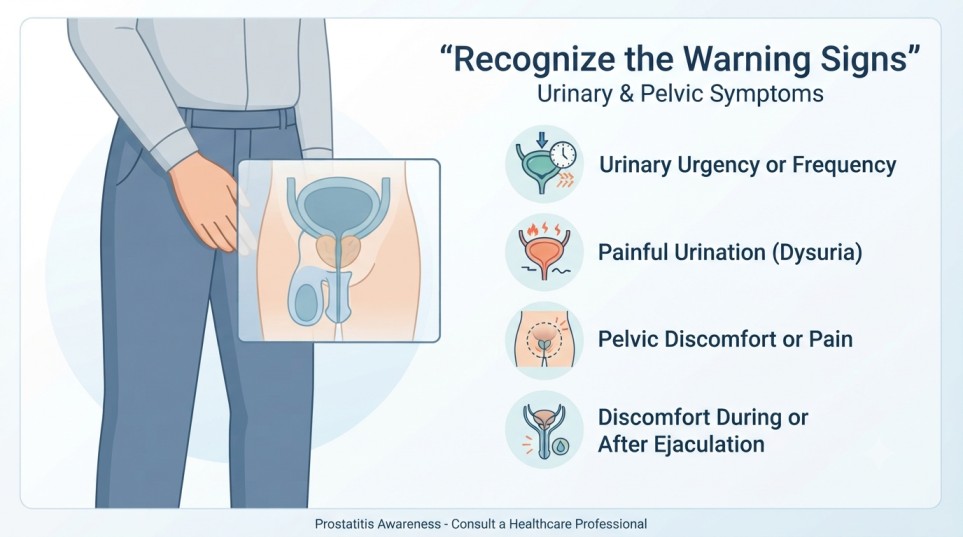
The symptoms can vary from one person to another, depending on what is contributing to the condition. Some men may notice urinary changes, while others mainly experience discomfort in the pelvic area.
Common symptoms can include:
- Pain or burning during urination
- Needing to urinate more often than usual
- A strong or sudden urge to urinate
- Difficulty starting urination
- Pain in the lower abdomen, lower back, or pelvic area
These symptoms can also occur with other urinary or prostate conditions, so they do not by themselves identify the cause. Persistent or bothersome symptoms are worth discussing with a healthcare professional.
How Is Prostatitis Evaluated?
There is no single test that can identify every case. A healthcare professional usually starts by asking about the symptoms, when they began, how often they occur, and whether they have changed over time.
Depending on the symptoms, the evaluation may include:
- Urine testing to look for signs of infection or inflammation.
- Blood tests when additional information is needed.
- Physical examination to assess areas related to the symptoms.
- Other tests in selected cases when the initial evaluation does not provide enough information.
The tests used can vary because the possible causes are not the same in every person. A healthcare professional may use the results together with the symptom pattern to determine what should happen next.
A test result should be interpreted in context rather than used on its own to identify the cause.
What Treatment Options May Be Considered?
Treatment depends on what is causing the symptoms and whether an infection is identified. There is no single treatment that is appropriate for every person.
When a bacterial infection is confirmed or strongly suspected, a healthcare professional may prescribe antibiotics. The choice and duration depend on the individual situation.
When bacteria are not identified, management may focus on the symptoms and factors that could be contributing to discomfort. Depending on the situation, a healthcare professional may consider medicines for urinary symptoms, pain management, or other approaches.
For persistent symptoms, treatment may sometimes involve more than one approach. The goal is to address the identified cause when possible and manage symptoms safely rather than assuming that every case requires antibiotics.
Treatment should be based on professional evaluation, particularly when symptoms are persistent, severe, or returning repeatedly.
What Can Help Manage Symptoms in Daily Life?

Some everyday habits may help make symptoms more manageable, depending on the individual and the underlying cause. The right approach can vary depending on the individual and the underlying cause.
- Stay adequately hydrated: Drinking enough fluids is important, but you may find it helpful to spread your intake throughout the day rather than drinking a large amount at once.
- Pay attention to personal triggers: Caffeine, alcohol, or very spicy foods may worsen urinary or pelvic discomfort for some people. If you notice a clear connection, reducing the trigger may be worth discussing with a healthcare professional.
- Avoid prolonged sitting: If pelvic discomfort is a problem, taking regular movement breaks may be more comfortable than remaining seated for long periods.
- Maintain regular physical activity: Moderate activity can support general health and may be a useful part of an overall wellness routine.
- Don’t rely on self-treatment alone: Lifestyle measures can complement appropriate care, but persistent symptoms should not be managed solely through home remedies.
These measures are intended as practical supportive habits, not as a replacement for evaluation or treatment when symptoms require medical attention.
👉🏼 If you want practical guidance on choosing nutrient-rich foods and building healthier eating habits, read our Prostate Health Diet: Foods, Nutrients & Healthy Eating Tips.
When Should You See a Healthcare Professional?
Some urinary or pelvic symptoms may be mild and temporary, but symptoms that persist, return frequently, or interfere with daily activities deserve medical attention.
Consider speaking with a healthcare professional if you experience ongoing pelvic discomfort, painful urination, changes in urinary flow, frequent urination, or discomfort associated with ejaculation.
Seek prompt medical care if you develop a fever or chills along with urinary symptoms, have significant difficulty passing urine, or notice blood in your urine. These symptoms may require timely evaluation rather than self-treatment.
Getting checked does not necessarily mean that a serious condition is present. It simply allows the underlying cause to be assessed and helps determine whether any treatment or follow-up is appropriate.
👉🏼 If you want to learn more about enlarged prostate symptoms, causes, and management approaches, read our Enlarged Prostate: Symptoms, Causes & Natural Relief Guide.
Practical Takeaways
Understanding the condition does not mean you need to make major changes to your routine. A few practical principles can help you approach prostate and urinary concerns more thoughtfully:
- Pay attention to urinary or pelvic changes that persist or return.
- Avoid assuming that every symptom has the same cause.
- Keep track of recurring symptoms and discuss them during a medical visit.
- Be cautious about products marketed as treatments without strong supporting evidence.
- Follow the evaluation and treatment plan recommended for your individual situation.
The main takeaway is simple: pay attention to persistent symptoms, avoid self-diagnosis, and seek appropriate medical guidance when needed.
Frequently Asked Questions (FAQs)
Evidence & References
The information in this article is based on medical guidance and evidence from established health organizations. Prostatitis can have different causes, and symptoms, evaluation, and treatment may vary depending on the underlying type and individual circumstances.
Conclusion
Prostatitis can involve different causes and symptom patterns, so there is no single approach that applies to every man. Some cases are associated with bacterial infection, while others may involve persistent pelvic or urinary symptoms without an identified infection.
The most useful approach is to pay attention to ongoing changes, avoid self-diagnosis, and seek professional evaluation when symptoms persist or become concerning. Healthy daily habits can support overall well-being, but they should not replace appropriate medical care.
Understanding the condition—and knowing when to seek help—can make it easier to approach prostate health with accurate information rather than assumptions or unsupported claims.
Medical Disclaimer
This article is for general informational and educational purposes only. It is not intended to provide medical advice, diagnosis, or treatment. If you have persistent, worsening, or concerning symptoms, consult a qualified healthcare professional for appropriate evaluation and care. Do not start, stop, or change any medication or treatment based solely on information in this article.
Image Disclaimer: Medical illustrations are for educational purposes only and may not represent exact human anatomy or individual medical conditions.