
Signs of an Unhealthy Liver: Common Symptoms, Causes, and When to Get Checked
Written by Paresh Shah, Pharmacist | Last updated: October 11, 2026
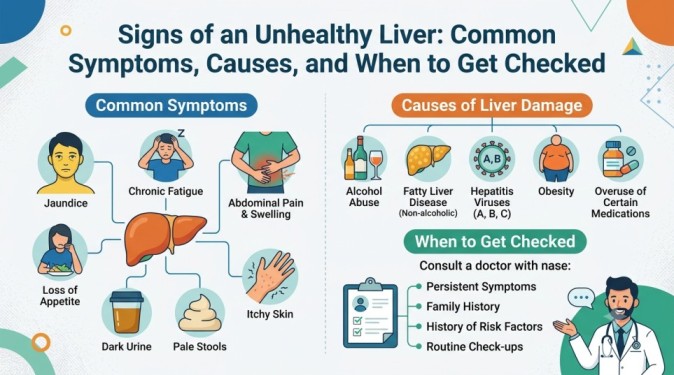
Your liver can be struggling for years without sending a single clear warning.That is what makes the signs of an unhealthy liver so easy to miss. The liver filters your blood, makes bile for digestion, and processes nutrients and medicines, yet it has a large reserve, so early problems often cause no symptoms at all. When symptoms do show up, they tend to be vague, like tiredness or a poor appetite, and they overlap with dozens of other conditions.
This guide covers the most common symptoms, the warning signs that need urgent care, what can cause liver problems, and the tests doctors use to check liver health. It is educational and cannot tell you what is happening in your own body.
Why Liver Problems Often Go Unnoticed
There are three main reasons liver trouble hides so well:
- The liver has a big reserve. It can keep doing its job even when part of it is damaged, and it can repair itself to a degree. Symptoms often appear only after significant damage has built up.
- Early symptoms are vague. Fatigue, mild nausea, or a heavy feeling after meals are easy to blame on stress, poor sleep, or a bad meal.
- Many people find out by accident. A routine blood test or an ultrasound done for another reason is often what first points to a liver problem.
Common Signs of an Unhealthy Liver
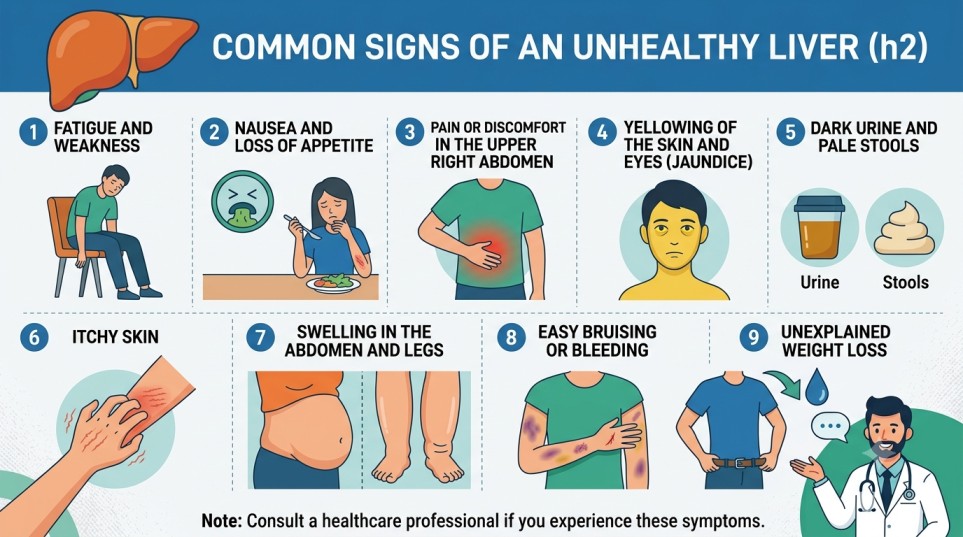
Early signs of liver damage are often subtle and may include ongoing tiredness, nausea, poor appetite, and mild discomfort in the upper right abdomen. Yellowing of the skin or eyes, dark urine, and swelling usually show up when liver problems are more advanced. None of these signs proves a liver problem, because many other conditions can cause them.
Fatigue and Weakness
Tiredness that does not improve with rest is commonly reported with liver conditions. It is also one of the least specific liver problem symptoms. Anemia, thyroid problems, poor sleep, and depression can all cause it, so fatigue on its own rarely points to the liver.
Nausea and Loss of Appetite
Feeling queasy, getting full after a few bites, or losing interest in food can accompany liver inflammation and more advanced liver disease. If this continues for weeks, it can lead to unintended weight loss.
Pain or Discomfort in the Upper Right Abdomen
A dull ache or sense of fullness under the right ribs can come from an inflamed or enlarged liver. The same area also hosts the gallbladder, stomach, and chest wall muscles, so pain here has many possible causes and needs a doctor’s evaluation.
Yellowing of the Skin and Eyes (Jaundice)
Jaundice happens when bilirubin, a yellow pigment, builds up in the blood. It is usually noticed first in the whites of the eyes. Liver disease is one cause, but gallstones and bile duct blockages can also do it. Any new yellowing deserves prompt medical attention.
Dark Urine and Pale Stools
Urine the color of tea or cola, along with pale or clay-colored stools, can signal that bilirubin and bile are not moving through the body normally. Together with yellowing of the skin, this is a pattern doctors take seriously.
Itchy Skin
Persistent itching without an obvious rash can be linked to problems with bile flow. It is not specific to the liver, but itching that lasts and has no clear cause is worth mentioning to your doctor.
Swelling in the Abdomen and Legs
In more advanced liver disease, fluid can collect in the abdomen (ascites) or in the legs and ankles (edema). A tight, swollen belly or new swelling in the lower legs should be checked soon.
Easy Bruising or Bleeding
The liver makes many of the proteins that help blood clot. When it is not working well, you may bruise easily or notice nosebleeds or bleeding gums. If you take blood thinners or aspirin, tell your doctor or pharmacist about any new bruising.
Unexplained Weight Loss
Losing weight without trying, sometimes with muscle loss, can occur in chronic liver disease. It also has many other causes, but unexplained weight loss always deserves a conversation with a healthcare provider.
Signs That Need Urgent Medical Care
Some symptoms should not wait for a regular appointment.
- Confusion, unusual sleepiness, trouble staying awake, or sudden changes in behavior
- Vomiting blood, or passing black, tarry, or bloody stools
- Severe abdominal pain, or a swollen abdomen with fever
- Yellowing of the skin or eyes together with severe weakness
Common Causes of Liver Problems
Several different conditions can damage the liver, and the cause shapes how it is managed. The signs alone cannot tell you why.
Fatty Liver Disease (MASLD)
Fatty liver disease, now commonly called MASLD, happens when extra fat builds up in liver cells. It is strongly linked with excess weight, type 2 diabetes, and abnormal cholesterol, and it often causes no symptoms. If you have been told you have a fatty liver, our 👉 fatty liver diet guide explains which foods to emphasize and which to limit.
Alcohol-Related Liver Disease
Long-term heavy drinking can inflame the liver and, over time, lead to scarring. It can progress quietly, which is one reason doctors ask about alcohol use at checkups.
Viral Hepatitis
Hepatitis A, B, and C are viral infections that inflame the liver. Hepatitis B and C can be long-lasting and silent for years. Vaccines exist for hepatitis A and B, and antiviral treatment is available for hepatitis C, which is why testing matters.
Medications, Supplements, and Toxins
Some prescription medicines and certain herbal products can also stress the liver. Your doctor or pharmacist can review your full list. Do not stop a prescribed medicine without talking to your prescriber first. Many medicines list possible liver effects on the label or package insert, and your pharmacist can help you check whether a medicine or supplement is a good fit before you start it.
Autoimmune, Genetic, and Bile Duct Conditions
Less common causes include autoimmune hepatitis, iron overload (hemochromatosis), Wilson disease (a rare condition in which copper builds up in the body), and conditions that affect the bile ducts. These are usually found through specialized blood tests.
Because fatty liver disease is considered a metabolic condition, our metabolic health guide offers a broader, general look at how food, movement, sleep, and daily routines fit together.
Tests Doctors Use to Check Liver Health
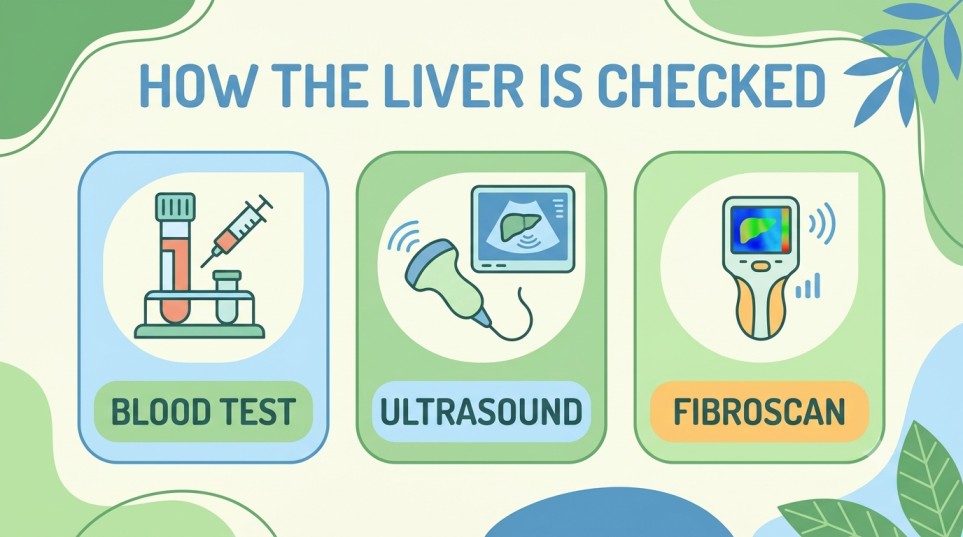
A doctor may start with a simple blood test called a liver function test. It measures enzymes such as ALT and AST, along with proteins and bilirubin, to see how well the liver is working. Depending on the results and your symptoms, they may suggest further testing. Here is what each option does in plain terms:
- Liver function tests (blood): Measure liver enzymes, bilirubin, and proteins like albumin to look for signs of injury or reduced function.
- Hepatitis blood tests: Check for hepatitis A, B, and C infection or immunity.
- Ultrasound, CT, or MRI: Imaging that can show fat, size changes, or structural problems in the liver.
- FibroScan (elastography): A painless test that estimates liver stiffness, which can reflect scarring.
- Liver biopsy: A small tissue sample, used only when other tests cannot answer the question.
A normal test does not rule out every liver problem, and a mildly abnormal one does not always mean serious disease. Your doctor interprets results in the context of your symptoms and health history, so avoid trying to interpret numbers on your own.
When to See a Doctor for Liver Problems
- Symptoms that persist or keep returning, such as ongoing tiredness, nausea, or upper right abdominal discomfort with no clear explanation.
- Yellowing of the skin or eyes, dark urine, or pale stools. Do not wait on these.
- Risk factors, even with no symptoms. If you have type 2 diabetes, obesity, a history of heavy alcohol use, a family history of liver disease, past exposure to hepatitis B or C, or take medicines that can affect the liver, ask your doctor whether liver testing makes sense for you.
Bring a list of every medicine and supplement you take, including over-the-counter products. It helps your provider spot possible causes faster.
Key Takeaways
- Liver problems often cause no symptoms early on.
- Common signs include fatigue, nausea, poor appetite, upper right abdominal discomfort, jaundice, dark urine, itching, swelling, and easy bruising.
- These signs overlap with many other conditions, so they are a reason to get checked, not a diagnosis.
- Confusion, vomiting blood, black stools, or severe abdominal pain need urgent care.
- Blood tests and imaging can detect liver problems, and your doctor decides which are right for you.
Frequently Asked Questions (FAQs)
If you are researching liver supplements, our HepatoBurn review (it contains affiliate links) explains what the manufacturer claims and what the evidence shows. A supplement is not a substitute for getting symptoms checked, so talk with your doctor or pharmacist first, especially if you take other medicines.
Conclusion
The signs of an unhealthy liver are easy to dismiss because they are quiet, vague, and shared with many other conditions. The most useful step is not to guess. If symptoms persist, if you notice yellowing, dark urine, or swelling, or if you have risk factors, a simple blood test can help show what is going on. Seek urgent care for the warning signs listed above, and keep your care team informed about every medicine and supplement you take.
References
CDC: Vaccines exist for hepatitis A and B
Cleveland Clinic: liver function test
NIDDK (NIH): Liver Disease
Medical Disclaimer
The information in this article is for educational and informational purposes only and is not intended as medical advice, diagnosis, or treatment, even though it is written by a pharmacist. It should not replace guidance from your doctor or other qualified healthcare provider. Symptoms described here can have many causes. Never ignore or delay seeking medical advice because of something you have read on this website. If you have severe symptoms, seek emergency care.