
Fatty Liver Diet Guide: Foods That Support a Healthier Liver
Written by Paresh Shah, Pharmacist | Last updated: October 11, 2026
Few diagnoses leave people as confused as fatty liver. There are rarely any dramatic symptoms, yet the advice almost always starts in the same place: change how you eat.
A fatty liver diet is not a trendy cleanse or a quick fix. It is an everyday eating pattern that helps your body handle fat and sugar more efficiently, so less fat is stored in liver cells over time. This guide explains which foods are generally linked with better liver health, which ones are worth limiting, and how to build a realistic week of meals. It is educational and does not replace advice from your own healthcare provider.
What a Fatty Liver Diet Is Trying to Do
Extra fat builds up in the liver, usually alongside factors such as excess body weight, insulin resistance, high blood pressure, or abnormal cholesterol. The eating patterns that drive those factors also tend to drive liver fat, which is why food matters so much.
Most dietary advice comes down to three goals:
- Reach and maintain a healthier weight gradually, if you are carrying extra weight.
- Cut back on added sugar and refined carbohydrates, especially sugary drinks.
- Favor unsaturated fats and fiber-rich plant foods over heavily processed options.
Research and professional guidance suggest that losing around 5% of body weight can reduce liver fat, and larger losses may be linked with improvements in liver inflammation. No single food or ‘superfood’ can do this on its own. The overall pattern is what counts.
Food is only one part of the picture. For a broader, general look at how eating, movement, sleep, and daily routines fit together, see our guide to everyday metabolic health
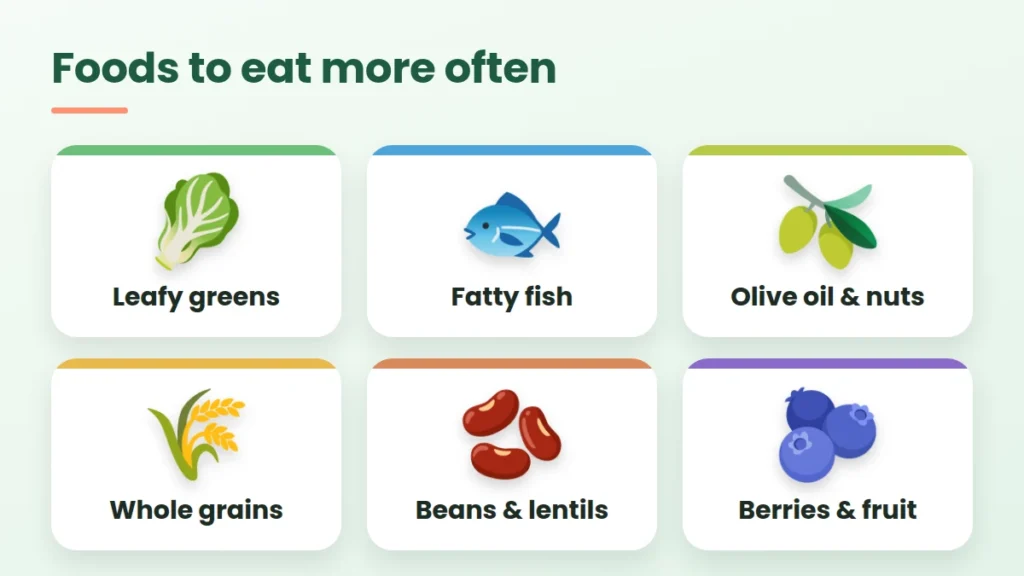
Best Foods to Eat on a Fatty Liver Diet
These foods fit well within a Mediterranean-style eating pattern, which has some of the strongest research support for reducing liver fat.
Leafy Greens and Cruciferous Vegetables
Spinach, kale, arugula, broccoli, cauliflower, and Brussels sprouts are low in calories and high in fiber, which helps you feel full. Studies link vegetable-rich diets with better metabolic health, though evidence for any one vegetable is limited. A simple goal: fill half your plate with vegetables at lunch and dinner.
Fatty Fish
Salmon, sardines, trout, and mackerel provide omega-3 fats. Some trials suggest omega-3s may lower liver fat, although results are mixed. Fish twice a week is a common heart-health recommendation, and baking or grilling keeps it liver-friendly better than frying.
Olive Oil and Nuts
Extra virgin olive oil, walnuts, and almonds supply unsaturated fats that replace less healthy fats like butter and deep-fried oils. They are calorie-dense, so stick to a tablespoon of oil or a small handful of nuts per serving.
Whole Grains and Legumes
Oats, brown rice, quinoa, beans, lentils, and chickpeas digest slowly and provide fiber, which helps steady blood sugar. Swapping refined grains for these is one of the easiest upgrades you can make.
Whole Fruits
Berries, apples, oranges, and pears come with fiber that slows sugar absorption. Whole fruit is generally fine on a fatty liver diet. It is juice and sweetened fruit products that cause trouble.
Lean Proteins
Skinless poultry, tofu, tempeh, plain Greek yogurt, and legumes help you stay full and protect muscle while you manage your weight.
Foods to Avoid With Fatty Liver (and What to Limit)
Sugary Drinks and Fruit Juice
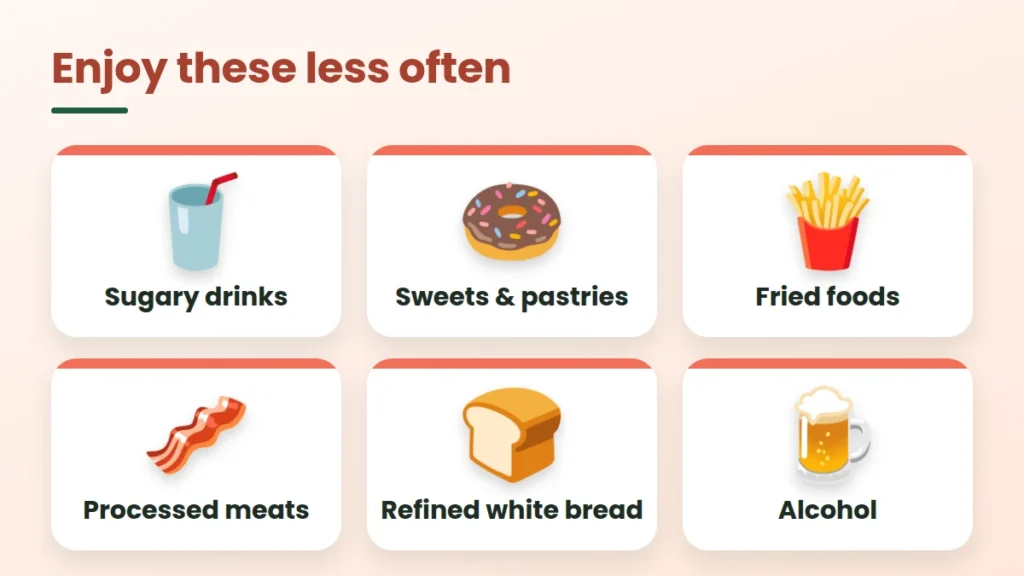
Soda, sweet tea, energy drinks, and fruit juice deliver a lot of sugar without making you feel full. Studies associate sugar-sweetened beverages, especially those with fructose, with higher liver fat. Cutting these is often the single easiest change.
Refined Carbs and Sweets
White bread, pastries, sweetened cereal, and candy digest quickly and may push blood sugar and insulin up. Over time, that pattern may be linked with more fat storage in the liver.
Fried and Ultra-Processed Foods
Fast food, chips, and packaged snacks often combine refined starch, added sugar, unhealthy fats, and extra calories. You do not need to be perfect, but making them an occasional food rather than a daily one makes a real difference.
Processed and Red Meat
Bacon, sausage, and deli meats, along with frequent red meat, have been associated with a higher risk of fatty liver in some studies. Limiting them is usually more realistic than banning them.
Alcohol
Alcohol puts additional stress on the liver. Many guidelines advise people with fatty liver to limit it or avoid it altogether, especially if there is scarring. Ask your doctor what is safe for you.
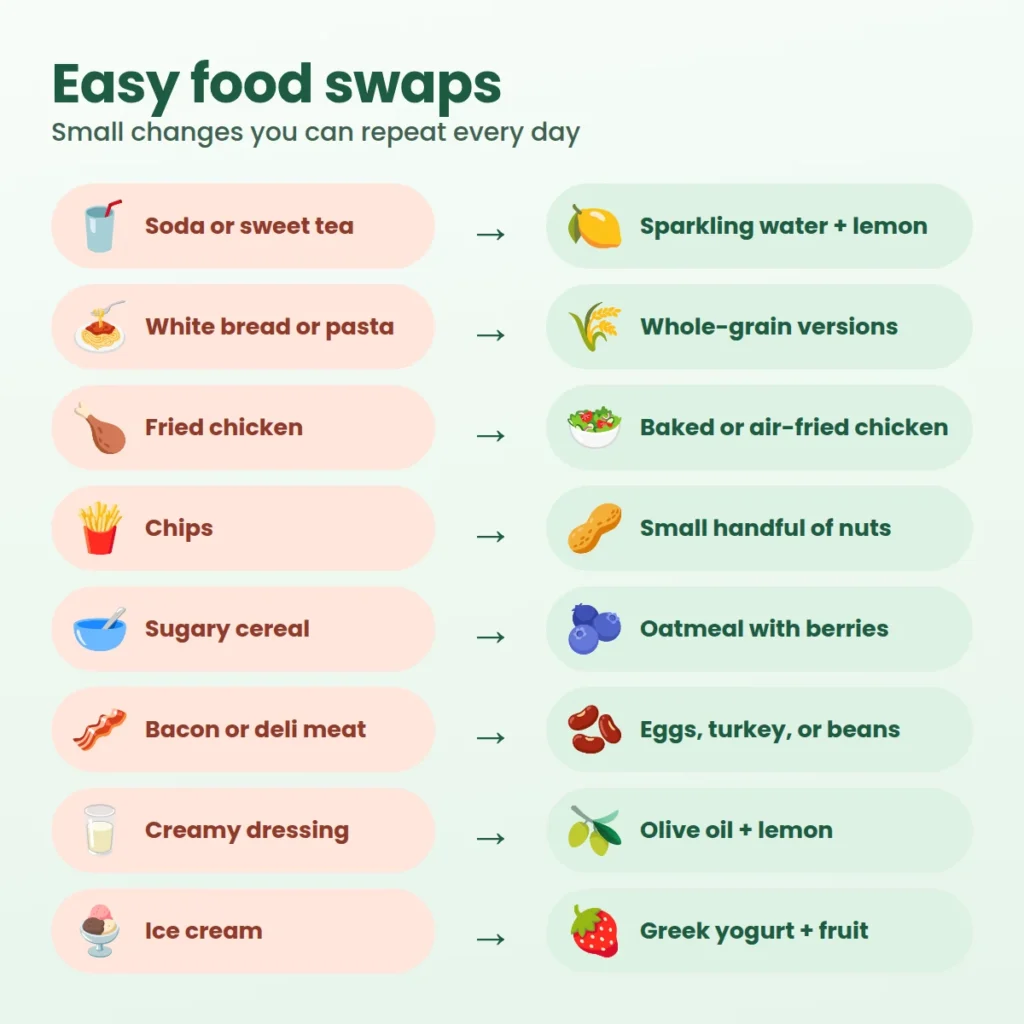
Easy Food Swaps
| Instead of | Try |
|---|---|
| Soda or sweet tea | Sparkling water with lemon, or unsweetened tea |
| White bread or pasta | Whole-grain bread or pasta, or chickpea pasta |
| Fried chicken | Baked or air-fried chicken |
| Chips | A small handful of unsalted nuts |
| Sugary cereal | Plain oatmeal with berries |
| Bacon or deli meat | Eggs, turkey breast, or beans |
| Creamy dressing | Olive oil with lemon or vinegar |
| Ice cream | Plain Greek yogurt with fruit |
A Sample One-Day Fatty Liver Diet Meal Plan
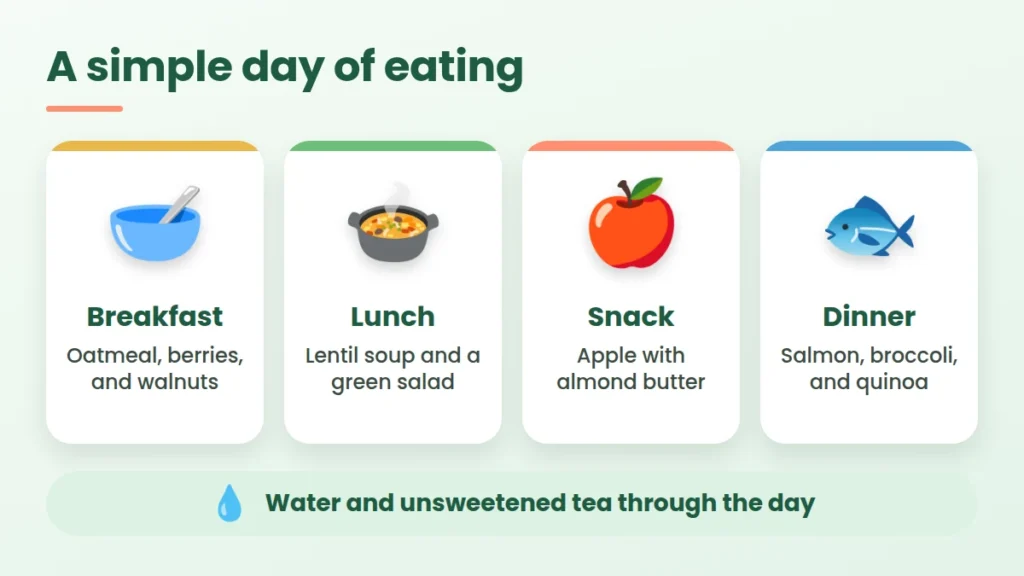
- Breakfast: Oatmeal with berries and chopped walnuts
- Lunch: Lentil and vegetable soup with a mixed green salad dressed in olive oil and lemon
- Snack: An apple with almond butter, or plain Greek yogurt
- Dinner: Baked salmon, roasted broccoli, and quinoa
- Drinks: Water and unsweetened tea
Portions depend on your age, activity, and health goals. A registered dietitian can tailor this to your needs.
Eating Habits That Make the Diet Easier to Stick With
- Aim for gradual weight loss. A slow, steady pace is generally preferred over crash diets, and very rapid weight loss may not be ideal for liver health.
- Check labels for added sugar. Names like high-fructose corn syrup, cane syrup, and dextrose all count.
- Watch portions of healthy fats. Olive oil and nuts are beneficial, but they add up quickly.
- Plan meals ahead. A simple weekly plan makes it easier to avoid last-minute takeout.
What About Supplements?
Food should come first. Supplements cannot replace a healthy eating pattern, and some products carry their own risks. If you are curious about what is available, our guide to 👉 dietary supplements for liver function explains what to look for (it contains affiliate links). Talk with your doctor or pharmacist before starting any supplement, especially if you take medications.
When to Talk to a Doctor
Fatty liver often causes no symptoms and is usually found through blood tests or imaging. Reach out to your healthcare provider if you have been diagnosed and are unsure about your care plan, or if you have ongoing fatigue or discomfort in the upper right abdomen. Seek prompt medical care for yellowing of the skin or eyes, dark urine, or abdominal swelling. Do not stop any prescribed medication without talking to your doctor first.
Key Takeaways
- Build meals around vegetables, whole grains, legumes, fish, olive oil, and nuts.
- Cut back on sugary drinks, refined carbs, fried foods, and processed meats.
- Whole fruit is fine; juice and sweetened products are the issue.
- Steady, gradual weight loss supports liver health better than crash dieting.
- Diet supports your care but does not replace medical follow-up.
Frequently Asked Questions
Conclusion
A fatty liver diet works best as a steady, enjoyable pattern rather than a short-term fix. Focus on adding more whole, minimally processed foods, trim the sugary drinks and heavily processed items, and build changes you can keep for years. Pair these habits with regular medical follow-up for the best results.
This article is for educational purposes only and is not medical advice. Always consult your doctor or a registered dietitian before making major dietary changes, especially if you have a medical condition or take medications.
Sources and Further Reading
- NIDDK (NIH): Eating, Diet, & Nutrition for NAFLD & NASH – Guidance on gradual weight loss, healthier fats, low-glycemic foods, and limiting alcohol.
- Mayo Clinic: Fatty Liver Disease (MASLD) Diet – Overview of the Mediterranean diet for people with MASLD.
- American Heart Association: Fish and Omega-3 Fatty Acids – Recommended fish intake for heart health.
- Cleveland Clinic: Metabolic Dysfunction-Associated Steatotic Liver Disease (MASLD) – Overview of causes, symptoms, and management.
Medical Disclaimer
The information in this article is for educational and informational purposes only and is not intended as medical advice, diagnosis, or treatment. It should not replace professional guidance from your doctor, registered dietitian, or other qualified healthcare provider. Individual health needs vary, so please consult a healthcare professional before making changes to your diet, lifestyle, or medications, especially if you have fatty liver disease, another medical condition, or take prescription drugs. Never ignore or delay seeking medical advice because of something you have read on this website. If you experience symptoms such as yellowing of the skin or eyes, dark urine, or abdominal swelling, seek medical care promptly.
Image Disclaimer: Images used in this article are for illustrative and educational purposes only. They are not intended to depict a specific medical condition, diagnosis, or individual, and they do not represent medical advice or guaranteed results.Some images may be AI-generated or digitally created for illustration.