
Human Ear Regeneration Science: Why Our Ears Don’t Heal and What New Research Reveals
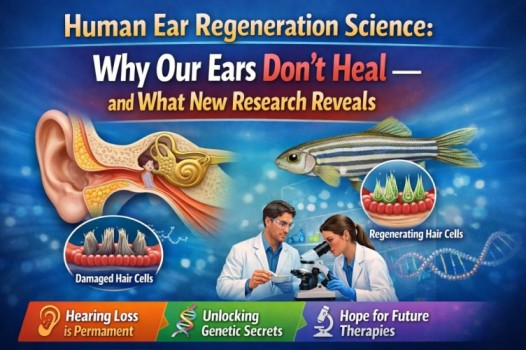
Table of Contents
The human ear is an architectural marvel of nature, yet it possesses a frustrating biological limitation: unlike some other species, our inner ear cells do not naturally repair or replace themselves once damaged. This lack of regenerative capacity is the primary scientific reason behind persistent hearing challenges and the onset of tinnitus.
For decades, the complexity of the inner ear made it nearly impossible for researchers to develop effective solutions, but we are now entering a new era of auditory science. Recent breakthroughs in “organoid” technology—essentially creating miniature models of human organs—are finally allowing scientists to study ear cell behavior in ways never before possible.
In this article, we will explore the latest findings from peer-reviewed research indexed in PubMed and the National Library of Medicine to understand why our ears struggle to heal and what the future of auditory health looks like. By understanding the biological basis of our hearing, we can better appreciate the importance of supporting these delicate sensory cells through informed, science-backed lifestyle choices.
The Biological Mystery: Why Human Ear Regeneration Science is So Complex
When we suffer a skin injury, our body naturally produces new cells to heal the wound. However, according to Human Ear Regeneration Science, the delicate sensory cells within our inner ear—known as “hair cells”—do not follow the same rules of recovery.
Recent reviews indexed in PubMed and the National Library of Medicine highlight that the extreme complexity and lack of accessibility of the inner ear are the primary reasons for this biological limitation. The scientific community identifies three main reasons behind this lack of regenerative capacity:
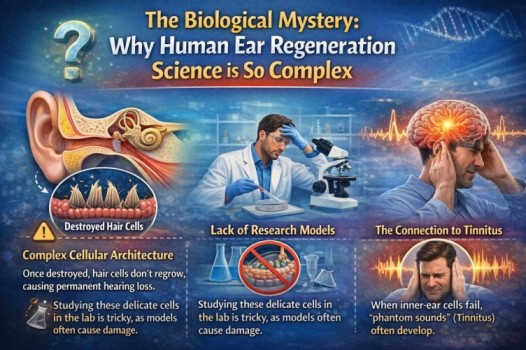
Complex Cellular Architecture: Inner ear hair cells are highly specialized. Unlike skin cells, once these hair cells are destroyed, the signal transmission to the brain is permanently disrupted, leading to irreversible hearing challenges.
Lack of Research Models: Historically, Human Ear Regeneration Science faced a major hurdle: the lack of suitable in vitro models to study these cells. For decades, scientists had no reliable way to experiment with ear tissue without causing further damage.
The Connection to Tinnitus: When these cells fail to repair themselves, the brain often attempts to compensate for the lost auditory input by creating “phantom” sounds, a condition medically recognized as Tinnitus.
This biological gap is exactly why new breakthroughs in Human Ear Regeneration Science, specifically the development of “Organoids,” are considered a revolutionary turning point in auditory research.
“Science shows that hearing isn’t just about our ears; it’s also about how our brain processes information. Maintaining a sharp mind is just as important as protecting our auditory health. If you want to boost your cognitive abilities, you can explore our guide on how to [improve working memory and focus naturally] to enhance your brain’s daily performance.”
The Breakthrough: How Human Ear Regeneration Science is Using Organoids
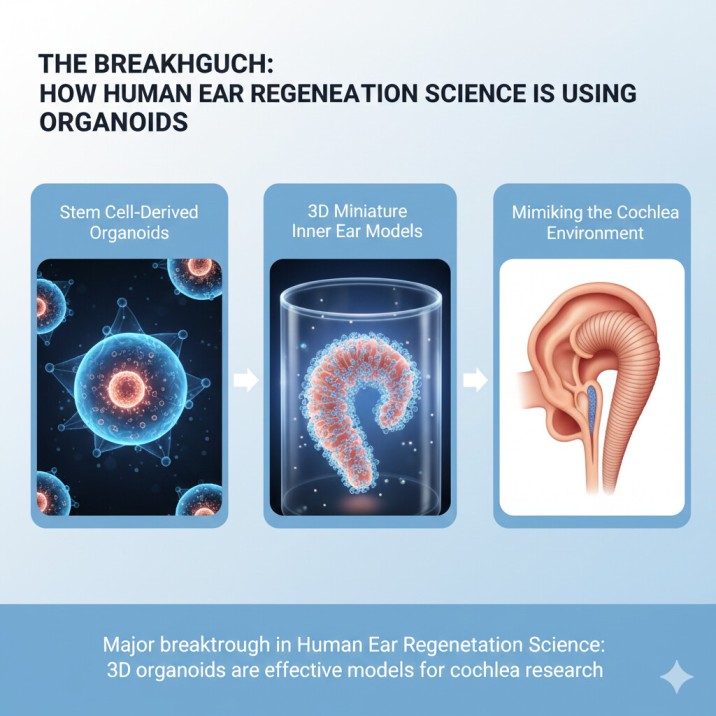
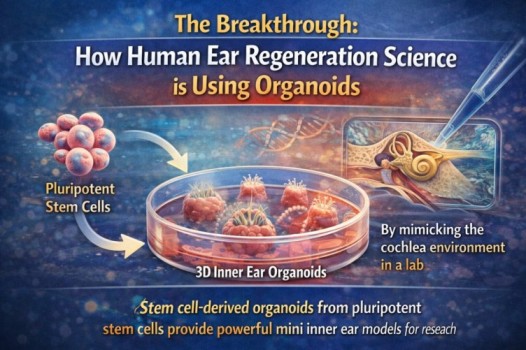
A major breakthrough in Human Ear Regeneration Science has been the development of stem cell-derived organoids. These are three-dimensional, miniature models of the inner ear created in a laboratory setting.Research shows that 3D organoids created from pluripotent stem cells are now the most effective way to mimic the cochlea environment in a lab
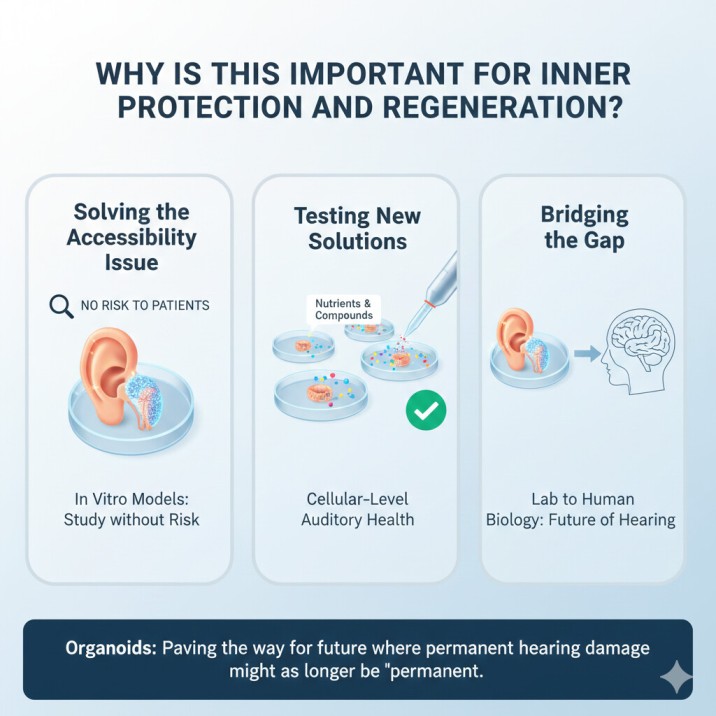
Why is this so important for inner ear protection and regeneration?
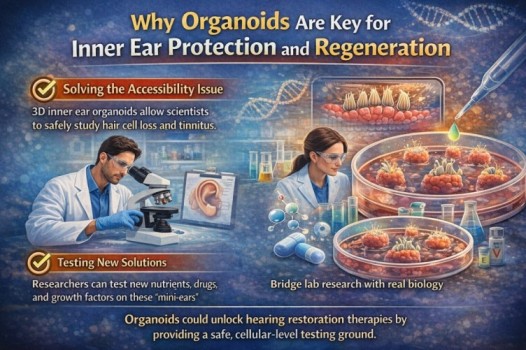
Solving the Accessibility Issue: Since we cannot easily take samples from a living person’s inner ear, these in vitro models allow scientists to study hair cell loss and tinnitus without any risk to patients.
Testing New Solutions: Researchers can now test how different nutrients and compounds interact with these “mini-ears” to see what truly supports auditory health at a cellular level.
By bridging the gap between lab research and human biology, these organoids are paving the way for a future where permanent hearing damage might no longer be “permanent”.
Beyond the Lab: Practical Steps in Human Ear Regeneration Science for Daily Auditory Health
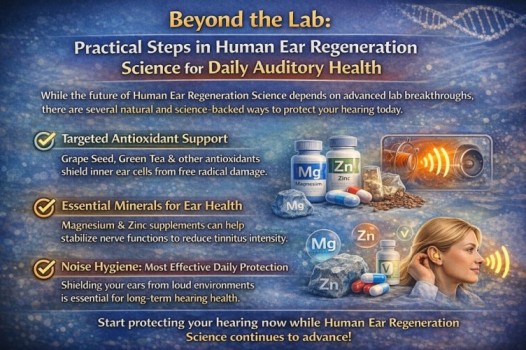
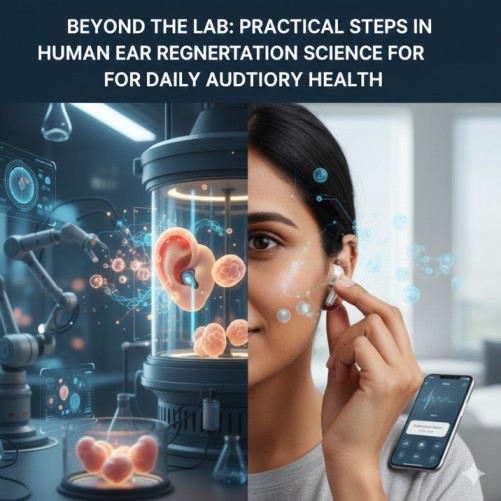
While the future of Human Ear Regeneration Science lies in advanced laboratory breakthroughs, there are several natural ways to improve hearing and protect your sensory cells today. You don’t have to wait for stem-cell therapies to become mainstream to start prioritizing your auditory health.
If you are currently seeking ear ringing relief or looking for ways to stop tinnitus naturally, modern research suggests that proactive protection is just as important as future cures. According to insights from the National Library of Medicine, oxidative stress is a major contributor to hair cell loss.
If you are currently seeking ear ringing relief or looking for ways to stop tinnitus naturally, modern research suggests that proactive protection is just as important as future cures. According to insights from the National Library of Medicine, oxidative stress is a major contributor to hair cell loss.
Targeted Antioxidant Support: Clinical observations show that natural extracts like Grape Seed and Green Tea provide essential antioxidants that shield the inner ear from free radical damage.
To support hearing loss prevention, consider these science-backed strategies:
Targeted Antioxidant Support: Clinical observations show that natural extracts like Grape Seed and Green Tea provide essential antioxidants that shield the inner ear from free radical damage.
Essential Minerals: Incorporating supplements for ear health that contain Magnesium and Zinc can help stabilize nerve functions and potentially reduce the intensity of phantom noises.
Noise Hygiene: Protecting your ears from loud noise remains the most effective “low-tech” solution to complement high-tech Human Ear Regeneration Science.
Essential Minerals: Incorporating supplements for ear health that contain Magnesium and Zinc can help stabilize nerve functions and potentially reduce the intensity of phantom noises.
Noise Hygiene: Protecting your ears from loud noise remains the most effective “low-tech” solution to complement high-tech Human Ear Regeneration Science.
Conclusion: Embracing the Future of Auditory Wellness
The journey through Human Ear Regeneration Science shows us that while we are on the verge of medical miracles, our current priority must be the preservation of our existing hearing. The development of inner ear organoids is a massive leap forward, offering hope that one day, hearing loss and tinnitus may be fully reversible.
However, until these laboratory breakthroughs become a reality for everyone, the secret to maintaining healthy ears lies in proactive care. By understanding the biological limitations of our auditory system and supporting it with science-backed nutrition—like antioxidants and essential minerals—we can significantly impact our quality of life.
Protecting your auditory health is not just about avoiding loud noises; it’s about giving your body the right tools to defend itself. Whether you are seeking ear ringing relief or are focused on long-term hearing loss prevention, stay informed, stay proactive, and value the science that keeps you connected to the world of sound.
Frequently Asked Questions: Insights from Human Ear Regeneration Science
“Beyond auditory science, our overall bodily functions are deeply interconnected. Just as cellular health is vital for our ears, proper digestion plays a key role in how our body absorbs nutrients for cellular repair. To understand how your digestive system impacts your long-term wellness, check out our detailed guide on [Understanding Digestion and Gut Health].”
Scientific Sources:
- Data sourced from the National Center for Biotechnology Information (NCBI).
- Research papers on inner ear regeneration via PubMed.
Medical Disclaimer
Disclaimer: The information provided in this article, including insights into Human Ear Regeneration Science, is for educational and informational purposes only and is not intended as medical advice. While we reference studies from PubMed and the National Library of Medicine, this content should not be used to diagnose, treat, or prevent any hearing-related conditions. Always seek the advice of a qualified physician or audiologist with any questions you may have regarding a medical condition or before starting any new supplements for ear health. Never disregard professional medical advice because of something you have read on this blog.