

TRUSTED SOURCE | HEALTH TIPS | PRODUCT REVIEWS | LATEST EDITION
Calorie Deficit for Weight Loss: How It Works and How to Calculate It
A calorie deficit occurs when you consume fewer calories than your body uses for energy over time. This energy imbalance is a fundamental part of weight loss, but creating a deficit does not mean you need to follow an extreme diet or constantly feel hungry.
Understanding how calorie needs work can help you make more informed decisions about food portions, activity levels, and daily habits. However, the right approach can vary from person to person based on factors such as age, body size, activity level, health status, and lifestyle.
In this guide, we’ll explain what a calorie deficit means, how it relates to weight loss, how calorie needs can be estimated, and practical ways to create a reasonable deficit while maintaining a balanced eating pattern. The goal is to provide a clear framework you can adapt to your own circumstances rather than promote a one-size-fits-all diet.
What Is a Calorie Deficit?
A calorie deficit means your body is using more energy than you consume from food and beverages over a period of time. When this energy gap is maintained, the body can draw on stored energy to help meet its needs, which can contribute to weight loss.
For example, if someone consistently consumes fewer calories than their body needs to maintain its current weight, their energy balance shifts toward a deficit. The exact amount of energy required varies considerably between individuals, so there is no single calorie target that works for everyone.
It is also important to understand that a calorie deficit is not the same as simply eating as little as possible. A very restrictive approach can make it harder to meet nutritional needs and maintain healthy eating habits. A more practical strategy is to create a reasonable energy deficit while still choosing foods that provide protein, fiber, vitamins, minerals, and other essential nutrients.
Weight can also fluctuate from day to day because of changes in water, food volume, sodium intake, digestion, and other factors. Therefore, short-term changes on the scale do not always reflect changes in body fat.
How Does a Calorie Deficit Lead to Weight Loss?
When your body has less energy available from food than it needs over time, it can draw on stored energy to help meet its energy requirements.
However, weight loss is not simply a straight-line process. As body weight decreases, the body generally requires less energy to maintain itself. Changes in daily movement, appetite, physical activity, and other factors can also affect how quickly weight changes over time.
The number on the scale can also fluctuate independently of changes in body fat. Water retention, sodium intake, digestion, carbohydrate intake, and other short-term factors may cause temporary increases or decreases in weight.
For this reason, progress is better evaluated over longer periods rather than by expecting the scale to decrease every day or every week. A sustainable approach focuses on consistent habits and overall trends rather than trying to force rapid changes.
Understanding a calorie deficit is an important part of weight management, but the foods you choose can also make healthy eating more satisfying and nutritious. Explore our guide to the Best Foods for Weight Loss to learn about protein-rich foods, high-fiber choices, fruits, vegetables, whole grains, and other nutritious options that can fit into a balanced eating pattern.
How to Estimate Your Calorie Needs
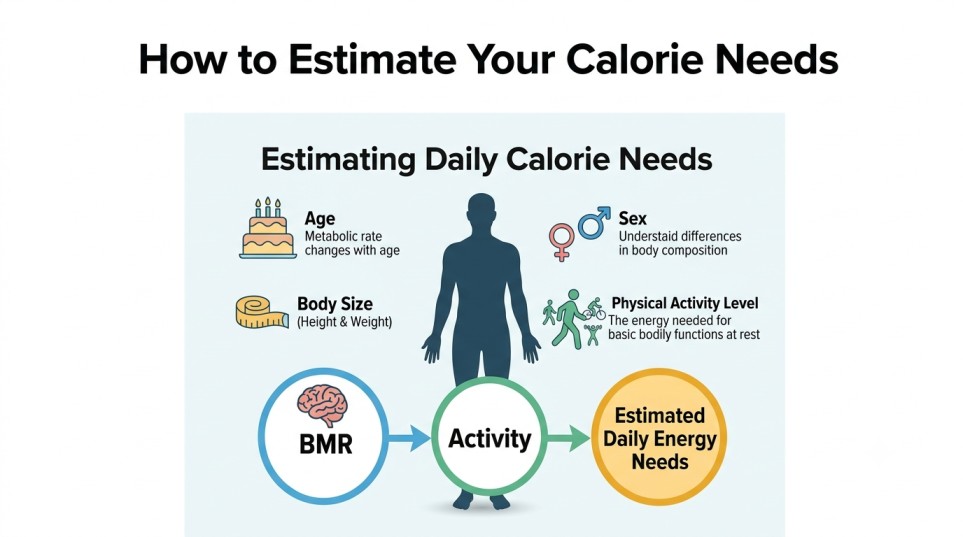
Before creating a calorie deficit, it helps to understand that your daily calorie needs are not the same as another person’s. Your energy requirements can be influenced by age, sex, body size, muscle mass, physical activity, and other individual factors.
A common starting point is to estimate your basal metabolic rate (BMR), which represents the energy your body needs for essential functions while at rest. An activity factor can then be used to estimate total daily energy expenditure (TDEE), which includes energy used through normal daily movement and physical activity.
These calculations are estimates rather than exact measurements. Your actual energy needs can change as your weight, activity level, and routine change.
For people trying to lose weight, an estimated maintenance calorie level can provide a starting point for understanding how much food may fit within a reasonable calorie deficit. However, calorie calculations should not become a reason to ignore hunger, nutritional needs, or overall well-being.
If you have a medical condition, are pregnant or breastfeeding, have a history of disordered eating, or take medications that affect weight or appetite, speak with a qualified healthcare professional before making substantial changes to your calorie intake.
How Much of a Deficit Is Appropriate for Weight Loss?
There is no single calorie deficit that is appropriate for everyone. The amount of energy someone needs each day depends on factors such as age, sex, body size, activity level, and overall health. A practical approach should therefore start with an estimate of individual calorie needs rather than copying a target from someone else.
A moderate calorie deficit is generally more sustainable than aggressive restriction. Cutting food intake too severely can make it difficult to meet nutritional needs and may increase hunger, fatigue, or difficulty maintaining the eating pattern over time.
Instead of focusing on the largest possible deficit, consider whether your approach allows you to eat a varied diet and maintain your normal daily activities. Your calorie needs may also change as your weight, activity level, and routine change, so an initial estimate should not be treated as a permanent number.
People with certain medical conditions, those taking medications that affect weight or appetite, and anyone with a history of disordered eating should seek individualized guidance from a qualified healthcare professional before intentionally restricting calorie intake.
Practical Ways to Support Weight Loss
Creating a calorie deficit does not require eliminating entire food groups or following a highly restrictive diet. Small, manageable changes can reduce overall energy intake while still allowing you to eat satisfying, nutritious meals.
Start With Food Choices That Provide More Volume
Vegetables, fruits, beans, and other fiber-rich foods can add volume to meals. Pairing these foods with adequate protein can help create balanced meals that are satisfying without relying heavily on calorie-dense foods.
Pay Attention to Portions
Portion size can have a meaningful effect on total calorie intake. Rather than removing favorite foods completely, consider serving smaller portions and building meals around nutrient-dense foods.
Reduce Liquid Calories When Appropriate
Sugary drinks, sweetened coffee beverages, and other calorie-containing drinks can contribute calories without providing the same level of fullness as many solid foods. Choosing water or unsweetened beverages more often can be a simple adjustment.
Increase Everyday Movement
Physical activity can increase the amount of energy your body uses. Walking more, taking the stairs, doing household activities, or adding structured exercise can all contribute to overall energy expenditure.
The most useful approach is one that fits your normal routine. A plan that is overly complicated or restrictive may be difficult to maintain, whereas small changes can become consistent habits.
How Food Quality Supports Healthy Weight Loss

A calorie deficit focuses on the amount of energy you consume, but food quality still matters for nutrition, fullness, and overall health. Two eating patterns can provide a similar number of calories while offering very different amounts of protein, fiber, vitamins, minerals, and other nutrients.
When creating a calorie deficit, prioritize foods that provide substantial nutrition for the calories they contain. Vegetables, fruits, whole grains, beans, lean protein sources, nuts, seeds, and other minimally processed foods can help create a varied eating pattern.
Protein and fiber can be particularly useful components of meals because they can contribute to fullness. However, there is no need to completely eliminate higher-calorie foods. Enjoying favorite foods in appropriate portions can make an eating pattern easier to maintain.
The goal is not to label individual foods as universally “good” or “bad.” Instead, consider how your overall eating pattern supports nutritional needs, satisfaction, and consistency.
How to Make Your Weight-Loss Approach Sustainable
It is more useful when it fits your everyday life. An approach that works only for a few days because it is overly restrictive may be difficult to maintain, even if the initial plan appears effective.
One way to improve sustainability is to build flexibility into your eating pattern. You do not necessarily need to avoid favorite foods completely. Including them occasionally in reasonable portions can make your overall approach easier to follow.
It can also help to create routines around meals, grocery shopping, and physical activity. Planning ahead can reduce the need to make food decisions when you are busy, traveling, or dealing with an unpredictable schedule.
Your approach should also be adaptable. If your activity level, body weight, schedule, or other circumstances change, your estimated calorie needs may change as well. Instead of treating a calorie target as a permanent number, use it as a starting point and reassess your approach based on longer-term progress and how you feel.
Sustainable weight management is not about following a perfect plan every day. Consistency over time is generally more realistic than trying to maintain strict rules without flexibility.
How Long Does It Take to See Results?
There is no universal timeline. Weight change can vary based on starting weight, estimated energy needs, activity level, food intake, body composition, and other individual factors.
Early changes on the scale may also reflect shifts in water and stored carbohydrates rather than changes in body fat alone. For this reason, a short-term increase or decrease does not necessarily indicate whether your overall approach is working.
Rather than expecting a specific amount of weight loss each week, look at longer-term trends. Consistent changes in eating habits, physical activity, and other lifestyle behaviors can provide a more useful picture of progress than individual daily weigh-ins.
It is also normal for progress to change over time. As body weight decreases, energy requirements may change, and your initial calorie estimate may no longer represent your current needs. If progress remains unclear despite consistent efforts, reviewing your approach with a qualified healthcare professional can provide more individualized guidance.
Practical Takeaways
The most useful approach to weight management is one that supports your nutritional needs and can realistically fit your life over time.
- Use calorie estimates as a starting point: Your energy needs are individual and can change as your weight, activity, or routine changes.
- Focus on consistency: Sustainable habits are generally more useful than trying to follow a perfect plan every day.
- Think beyond the scale: Daily weight changes do not always reflect changes in body fat. Look at longer-term trends instead.
- Allow flexibility: Travel, social occasions, busy schedules, and unexpected changes are normal parts of life. Your approach should be adaptable.
- Avoid extreme restriction: Trying to reduce food intake as much as possible can make it harder to maintain adequate nutrition and healthy habits.
- Reassess when necessary: If your circumstances or progress change significantly, your approach may need to be adjusted.
- Consider professional guidance: A healthcare professional or registered dietitian can provide individualized recommendations when your health history or circumstances require them.
The goal is not to achieve a perfect number every day. A balanced, flexible, and sustainable approach is more practical for long-term weight management.
Frequently Asked Questions (FAQs)
Understanding calorie balance is only one part of healthy weight management. For a broader look at 👉🏼 how to lose weight safely, including nutrition, physical activity, sleep, and sustainable lifestyle habits, see our complete guide to healthy weight loss.
Conclusion
Understanding energy balance can make weight management feel less confusing. Rather than focusing on extreme restriction or trying to follow a perfect number every day, a practical approach is to build eating and activity habits that you can maintain over time.
Start by understanding your estimated calorie needs, choose nutritious and satisfying foods, stay physically active, and pay attention to longer-term changes rather than daily fluctuations on the scale. Your needs can also change as your weight, activity level, health, or routine changes.
Most importantly, sustainable weight management does not require perfection. Consistency, flexibility, adequate nutrition, and realistic expectations can make healthy habits easier to maintain.
If you have a medical condition, take medications that may affect weight or appetite, are pregnant or breastfeeding, or have concerns about restrictive eating, consider speaking with a qualified healthcare professional for individualized guidance.
Evidence & References
The principles discussed in this article are based on established guidance about calorie balance, healthy eating, physical activity, and long-term weight management.
- NIDDK – Treatment for Overweight & Obesity
Supports reduced-calorie eating patterns, physical activity, monitoring, realistic weight-management approaches, and professional guidance.
NIDDK – Health Tips for Adults
Supports information about calorie intake, individual calorie needs, portion awareness, physical activity, and healthy weight management.
NIDDK – Healthy Eating & Physical Activity for Life
Supports balanced eating, regular physical activity, healthy habits, sleep, and long-term weight management.
Medical Disclaimer
This article is for educational and general informational purposes only. It is not a substitute for medical advice, diagnosis, or treatment. Individual calorie and weight-management needs vary. Consult a qualified healthcare professional before making significant dietary or lifestyle changes, especially if you have a medical condition, take medications, are pregnant or breastfeeding, or have concerns about restrictive eating.
Image Disclaimer
Images used with this article are for illustrative and educational purposes only. They are not intended to represent guaranteed weight-loss results, medical outcomes, or personalized dietary recommendations.