

TRUSTED SOURCE | HEALTH TIPS | PRODUCT REVIEWS | LATEST EDITION
Normal Lung Function: Essential Facts for Healthy Lungs
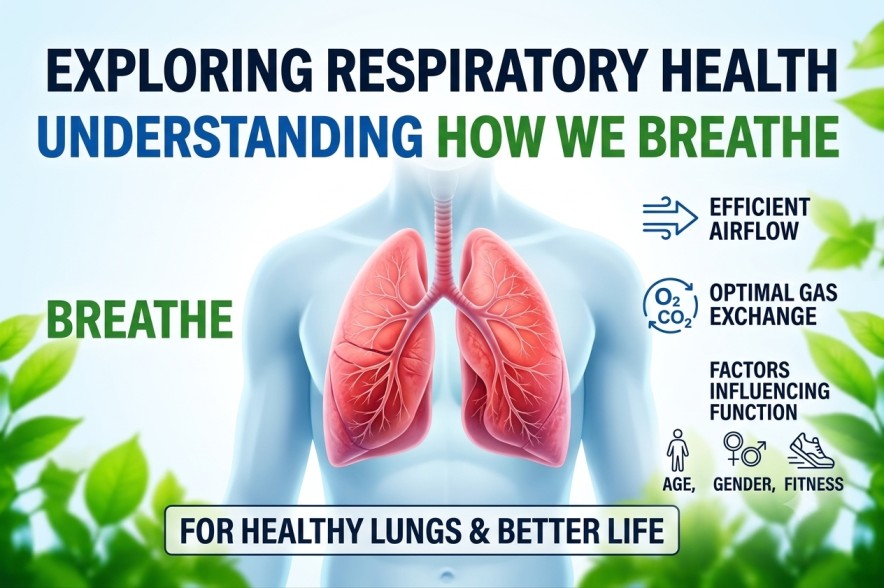
Normal lung function refers to how effectively your respiratory system moves air into and out of the lungs and transfers oxygen into the bloodstream while removing carbon dioxide. Healthy lungs do not necessarily work at exactly the same level in every person. Age, height, sex, fitness level, and other individual factors can influence respiratory measurements.
The lungs also work together with the airways, breathing muscles, blood vessels, and nervous system to maintain efficient gas exchange. Because of this, lung health is broader than simply being able to take a deep breath.
Understanding these basic functions provides a useful foundation for recognizing what healthy respiratory performance involves and why doctors may use lung function tests when a person has persistent breathing concerns.
How Do the Lungs Support Normal Breathing?
Normal breathing depends on several parts of the respiratory system working together. When you inhale, the diaphragm contracts and moves downward, allowing the chest cavity to expand and air to enter the lungs. The air travels through the airways until it reaches tiny air sacs called alveoli, where oxygen moves into nearby blood vessels and carbon dioxide moves from the blood into the alveoli.
During exhalation, the diaphragm and other breathing muscles relax, the chest cavity becomes smaller, and carbon-dioxide-rich air leaves the lungs. This continuous exchange helps supply oxygen to tissues while removing a waste gas produced by the body’s cells.
The process is not controlled by the lungs alone. The nervous system adjusts breathing in response to the body’s changing needs, such as during physical activity.
What Factors Influence Lung Function?
Lung performance can vary considerably from one person to another, so there is no single measurement that defines “normal” for everyone. Healthcare professionals interpret lung function using reference values that take factors such as age, height, and sex into account.
Other characteristics can also affect respiratory performance. For example, body size, physical condition, and the health of the airways and lung tissue may influence how much air a person can move and how efficiently gas exchange occurs.
This is why a lung-function result should not be judged simply against a number found online. Clinicians compare test results with appropriate reference ranges and consider the person’s overall clinical situation when interpreting them.
What Are the Signs of Normal Lung Function?
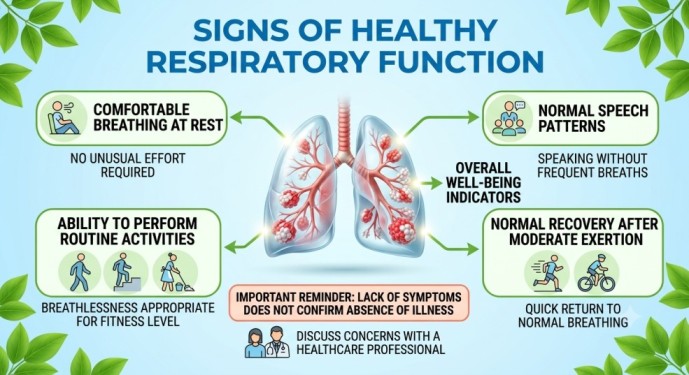
Knowing some general signs of normal lung function can help you understand how your respiratory system is performing. In everyday life, healthy respiratory function generally allows you to breathe comfortably at rest, speak without becoming unusually breathless, and perform routine physical activities appropriate for your fitness level.
Other reassuring signs may include recovering normally after moderate exertion and not experiencing persistent wheezing, unexplained chest tightness, or ongoing difficulty breathing. However, these observations alone cannot confirm that the lungs are functioning normally.
Some respiratory conditions can develop without obvious early symptoms. That is why persistent or unexplained changes in breathing should be discussed with a healthcare professional rather than judged solely by how well you feel.
How Is Normal Lung Function Measured?
Normal lung function cannot be determined reliably from symptoms alone. When a more objective assessment is needed, healthcare professionals may use pulmonary function tests to measure different aspects of how the respiratory system performs.
One of the most common tests is spirometry. It measures how much air a person can forcefully breathe out and how quickly that air leaves the lungs. Results can include measurements such as forced vital capacity (FVC) and forced expiratory volume in one second (FEV1), along with the FEV1/FVC ratio.
Other pulmonary tests can examine lung volumes or how efficiently gases move from the air sacs into the bloodstream. These measurements give clinicians a more complete picture than any single number can provide.
As we get older, some changes in respiratory performance can occur naturally. Learn more about how lung function changes with age and which changes are considered part of the normal aging process.
What Can Affect Normal Lung Function Over Time?
Normal lung function can change gradually as the body changes over the course of life. Some changes are part of normal aging, while others may be associated with environmental exposures, certain health conditions, or long-term habits.
Lung development continues through childhood and early adulthood. Later in life, the lungs and chest wall can become less flexible, and the strength of the muscles involved in breathing may decline. These changes can affect respiratory performance even when a person does not have a diagnosed lung disorder.
Exposure to tobacco smoke, workplace dust or fumes, and other respiratory irritants may also influence lung health. The effect depends on factors such as the type and duration of exposure.
Understanding these influences helps explain why respiratory measurements are interpreted according to an individual’s characteristics and medical history rather than a single universal standard.
👉🏼 Breathing techniques can be useful for people interested in improving breathing control and comfort. Explore these breathing exercises for lung health and learn how they can fit into a simple home routine.
What Do Normal Lung Function Test Results Mean?
A lung function test does not produce one universal number that applies to everyone. Healthcare professionals compare the measured results with reference values based on factors such as age, height, and sex, then assess whether the pattern is consistent with expected respiratory performance.
For spirometry, clinicians commonly consider measurements such as FEV1, FVC, and their relationship to one another. The overall pattern can help indicate whether airflow appears within the expected range or whether additional evaluation may be appropriate.
Importantly, a result outside a reference range does not automatically establish a diagnosis. Test quality, symptoms, medical history, and other clinical findings are considered together when interpreting pulmonary function results.
Practical Ways to Support Healthy Lung Function
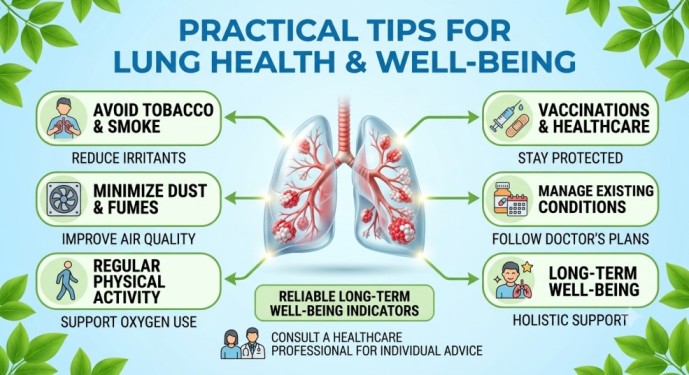
Supporting lung health does not require a single “lung-cleansing” method. Instead, focus on habits that reduce unnecessary strain on the respiratory system and support overall physical health.
Avoiding tobacco smoke is one of the most important steps. It is also useful to minimize exposure to dust, fumes, and other airborne irritants when practical. Regular physical activity can support cardiovascular fitness and help the body use oxygen efficiently, although exercise should be appropriate for your individual health and fitness level.
Keeping up with recommended vaccinations, managing known health conditions, and discussing persistent respiratory symptoms with a healthcare professional can also contribute to long-term respiratory well-being.
These measures support healthy habits, but they should not be viewed as a way to prevent or treat every lung condition.
👉🏼 Quitting smoking is an important step toward better respiratory health, although recovery can vary from person to person. Learn more about lung health after quitting smoking and the changes that may occur over time.
Key Takeaways About Normal Lung Function
Normal lung function means the respiratory system is moving air effectively and supporting the exchange of oxygen and carbon dioxide. However, healthy respiratory performance can differ between individuals, so there is no single “normal” number that applies to everyone.
A person’s age, height, sex, physical condition, medical history, and environmental exposures can all influence respiratory measurements. When testing is needed, healthcare professionals interpret results using appropriate reference values rather than relying on one isolated measurement.
The most useful takeaway is to look at lung health as a combination of how you feel, how you function during daily activities, and, when appropriate, objective medical assessment. Persistent or unexplained breathing changes should be evaluated rather than assumed to be a normal part of life.
When Should You Talk to a Healthcare Professional About Your Lung Health?
Even when day-to-day breathing seems normal, persistent or unexplained respiratory changes deserve attention. Consider speaking with a healthcare professional if you develop ongoing shortness of breath, persistent coughing, wheezing, chest discomfort, or a noticeable decline in your ability to perform usual activities. These symptoms can have many possible causes and cannot be used alone to determine whether your lungs are functioning normally.
Prompt medical evaluation is particularly important when breathing difficulties are sudden or severe. Sudden trouble breathing, confusion, or bluish lips or skin can indicate a serious problem requiring emergency care.
For people with ongoing concerns, a clinician can decide whether a physical examination, oxygen measurement, spirometry, or another assessment is appropriate.
Frequently Asked Questions (FAQs)
Conclusion: Understanding Your Normal Lung Function
Understanding normal lung function starts with recognizing that healthy respiratory performance is not defined by one specific number. The lungs must move air efficiently, exchange oxygen and carbon dioxide, and respond appropriately to the body’s changing demands.
Individual factors can influence respiratory measurements, which is why healthcare professionals interpret lung function results in context rather than relying on a universal standard. Paying attention to persistent changes in breathing and seeking appropriate medical evaluation can also help identify concerns that should not be ignored.
For most people, learning the basics of how the lungs work provides a useful foundation for making informed decisions about long-term respiratory health.
Evidence & References
1. National Heart, Lung, and Blood Institute (NHLBI) – Pulmonary Function Tests
NHLBI explains that pulmonary function testing assesses how well the lungs work and includes spirometry, lung-volume testing, and diffusion testing. Spirometry measures the amount of air a person can exhale and how quickly it can be expelled.
2. National Heart, Lung, and Blood Institute (NHLBI) – Updated Lung Function Evaluation
NHLBI notes that lung-function results are compared with appropriate normal reference ranges and that updated reference equations are used to improve interpretation of lung-function measurements.
3. American Thoracic Society (ATS) / European Respiratory Society (ERS) – Spirometry Standards
ATS identifies the ATS/ERS technical standards as widely recognized guidance for performing and interpreting pulmonary function testing. These standards support the careful interpretation of measurements such as FEV1, FVC, and the FEV1/FVC ratio rather than relying on one universal cutoff.
4. NHLBI – Defining Lung Health Through the Lifespan
NHLBI notes that lung structure, function, and capacity change across the lifespan and that some changes may represent normal development or aging, while others can reflect disease processes.
Best references to place at the end of the article
References
- National Heart, Lung, and Blood Institute (NHLBI). Pulmonary Function Tests.
- National Heart, Lung, and Blood Institute (NHLBI). Tests for Lung Disease.
- National Heart, Lung, and Blood Institute (NHLBI). Updated Lung Function Evaluation Equation.
- Stanojevic S, Kaminsky DA, Miller MR, et al. ERS/ATS Technical Standard on Interpretive Strategies for Routine Lung Function Tests. European Respiratory Journal. 2022;60(1):2101499. doi:10.1183/13993003.01499-2021.
Medical Disclaimer
The information provided in this article is for educational and informational purposes only and is not intended as medical advice, diagnosis, or treatment. Always seek the advice of a qualified healthcare provider or doctor with any questions you may have regarding a medical condition or respiratory health. Never disregard professional medical advice or delay in seeking it because of something you have read on this website.
Image Disclaimer: The images, diagrams, and visual graphics used on this page are for illustrative and educational purposes only. They do not represent exact anatomical or diagnostic clinical data. Stock images and AI-generated visuals are used to enhance user comprehension.